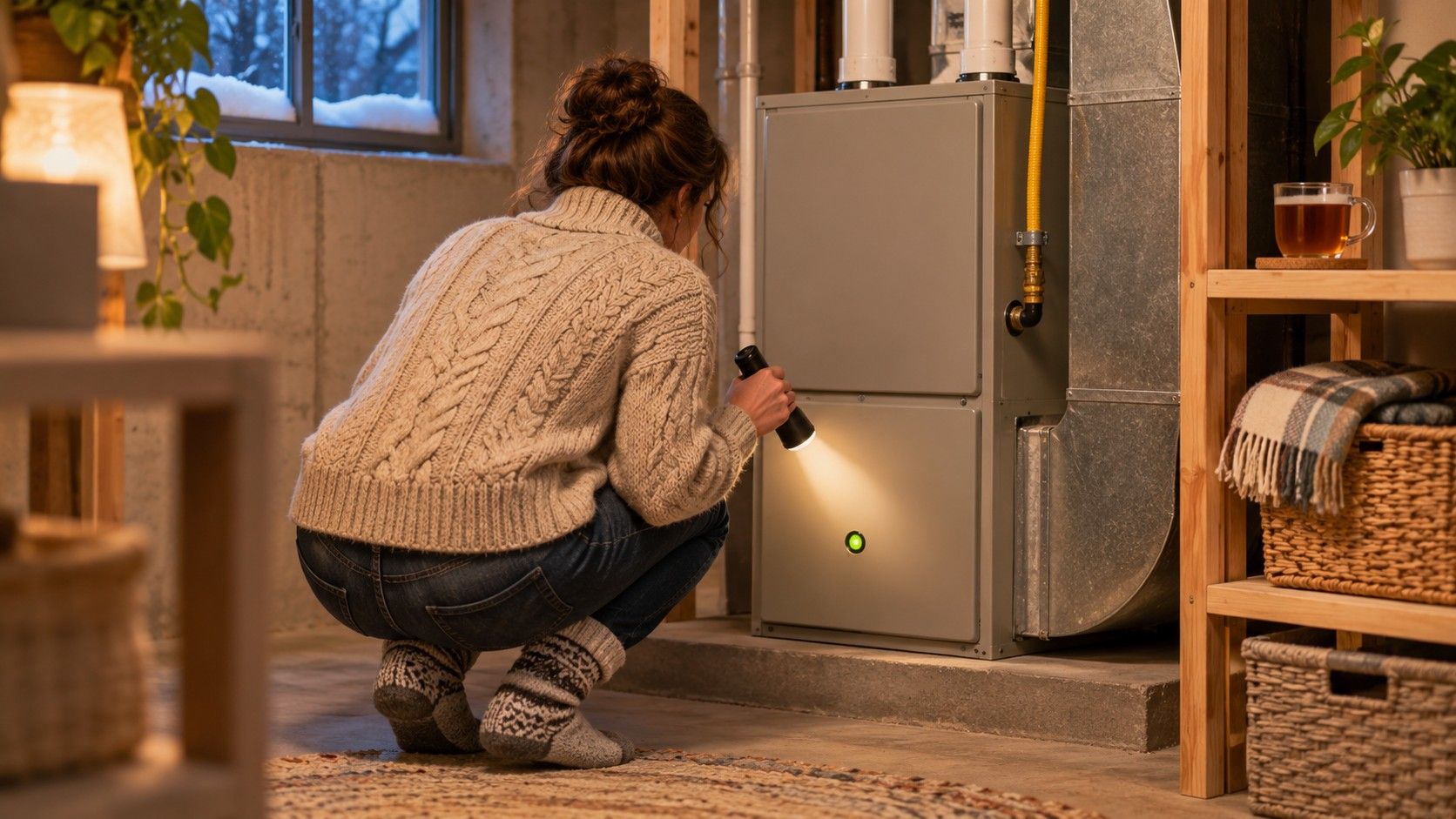
On this page
- Is no heat an emergency?
- Checks to try before you call
- Snow on the pipes outside
- The blinking light
- Is it safe to reset it?
- What's wrong with my furnace?
- Blowing cold air
- Starts, then shuts off
- Water around the furnace
- What's safe to touch
- Staying warm while you wait
- Power outages and heat pumps
- What to tell the company
- What repairs cost
- Fix it or replace it?
- Help paying, and renters
- Local heating companies
- Printable no-heat card
- Common questions
- Where this comes from
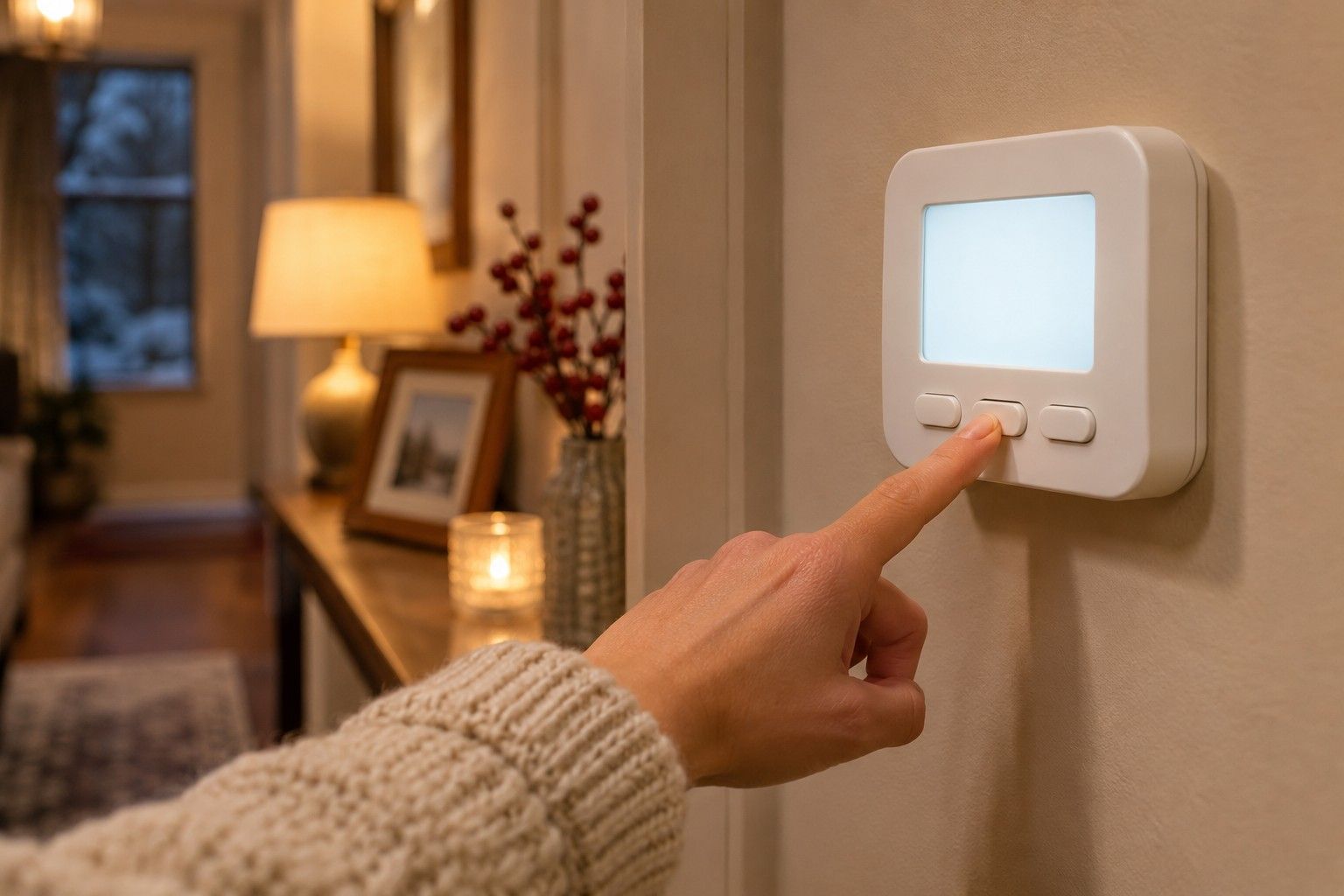
On the thermostat, check that it's on Heat, set a few degrees above the room, with fresh batteries. National cost guides put a service call at about $75 to $200.
It always seems to happen on the coldest night of the week, doesn't it? You're in the basement in your socks and the vents are cold. Take a breath. A lot of no-heat calls turn out to be something you can fix in a few minutes, and the rest go faster when you can tell the tech exactly what you saw. Here's how, from furnace makers' own manuals, Intermountain Gas and federal safety agencies, checked November 2, 2026.
Is no heat an emergency? When to get out or call now
Start here, because a few signs mean stop troubleshooting. Call a heating company right away if the house is getting cold and someone at home is a baby, an older adult or has heart or lung disease. Most no-heat problems land in the last group, the ones that are safe to check.
Get out, then call
Call 911 and Intermountain Gas, 800-548-3679, from outside
- A rotten egg or sulfur smell (natural gas)
- A carbon monoxide alarm is going off
- Headaches, dizziness, nausea or confusion, especially if several people feel it
- Smoke or flames
Turn it off and call
Turn it off at the thermostat and its switch
- A burning electrical or plastic smell
- The breaker trips again after one reset
- A boom when the burners light
- Water near wires or the control board
- A red tag on it from a gas company or tech
- It keeps locking out after one reset
Safe to check first
Try the checks below
- Nothing happens at all
- The fan runs but the air is cold
- It starts, then shuts off
- A little light is blinking
- Water on the floor, away from wires
- A dusty smell the first time this fall
If you smell gas, Intermountain Gas says:
- Get everyone out right away, including pets, and leave the door open behind you.
- Don't use a phone inside. Don't flip light switches, pull plugs, ring the doorbell, use the garage door opener or start a car, and don't open or close windows. Don't smoke or light a match.
- From a safe spot outside and away from the leak, call Intermountain Gas at 800-548-3679 and call 911.
- Don't go back in until someone tells you it's safe. If the gas catches fire, don't try to put it out.
For a carbon monoxide alarm, CPSC is just as plain: "Never ignore a carbon monoxide alarm when it sounds. Get outside immediately. Then call 911." Carbon monoxide has no smell, so the alarm (or people feeling sick at the same time) may be your only warning. The national Poison Help line is 1-800-222-1222. This is general safety information, not medical advice. If anyone feels sick, get outside and call 911.
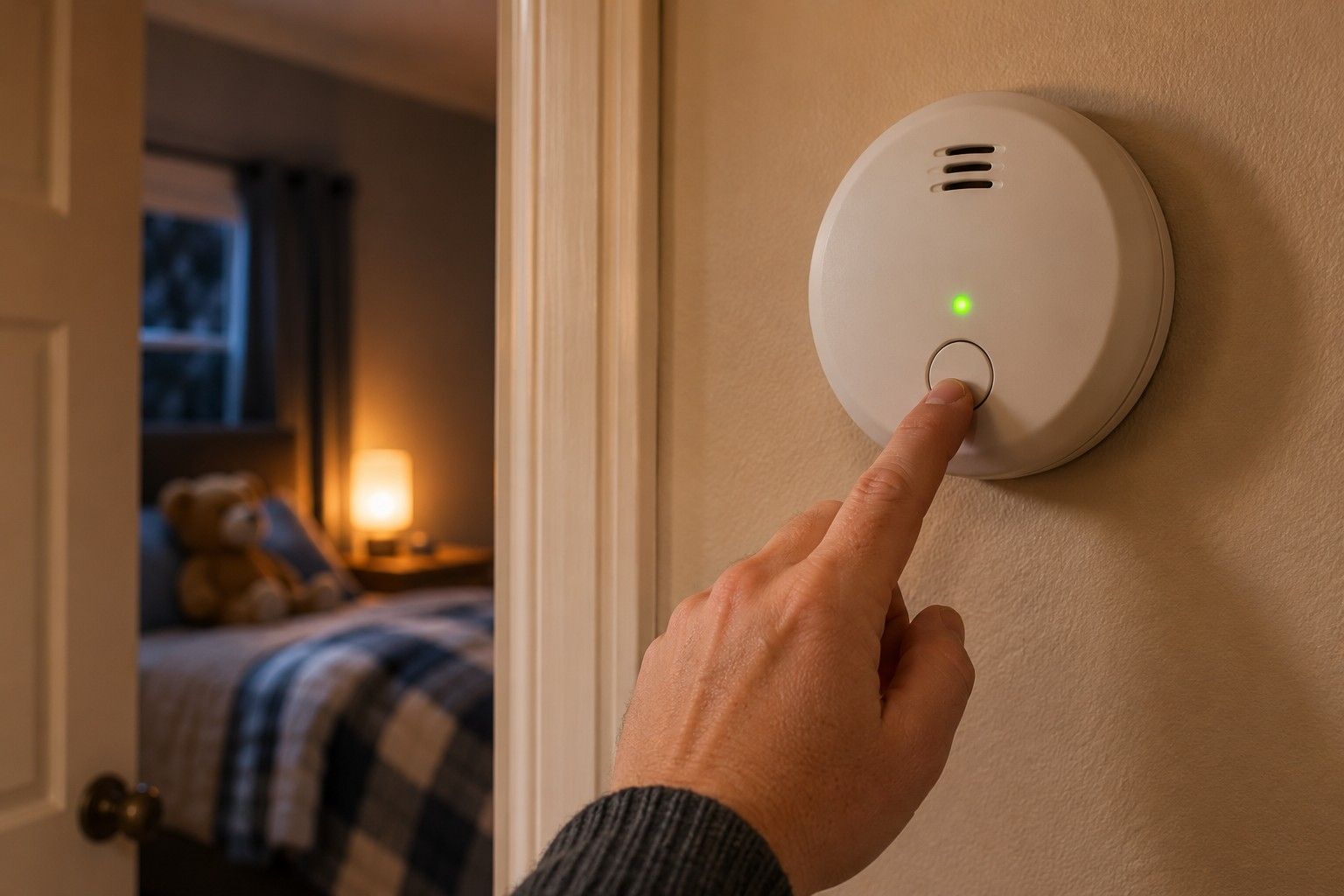
Red tag? If a gas company or tech hung a red tag on your furnace, it means they found something unsafe. Don't use it until it's repaired, and ask whoever tagged it what has to happen before it can run again.
What can I check myself before I call?
Go in this order. The early steps are the most common fixes, and the later ones help the tech if you still have to call. Bryant says the most common causes are a thermostat setting, a tripped breaker or a clogged filter. Tap That fixed it or Still no heat as you go.
Thermostat
1 min- Set it to Heat, not Off or Cool.
- Set the temperature a few degrees above what the room is now.
- Set the fan to Auto.
- Put in fresh batteries if it uses them. A blank screen can also mean the furnace has no power, which the next two steps check.
Nice work. Thermostat settings are one of the most common reasons a furnace seems dead, Bryant says.
Furnace switch
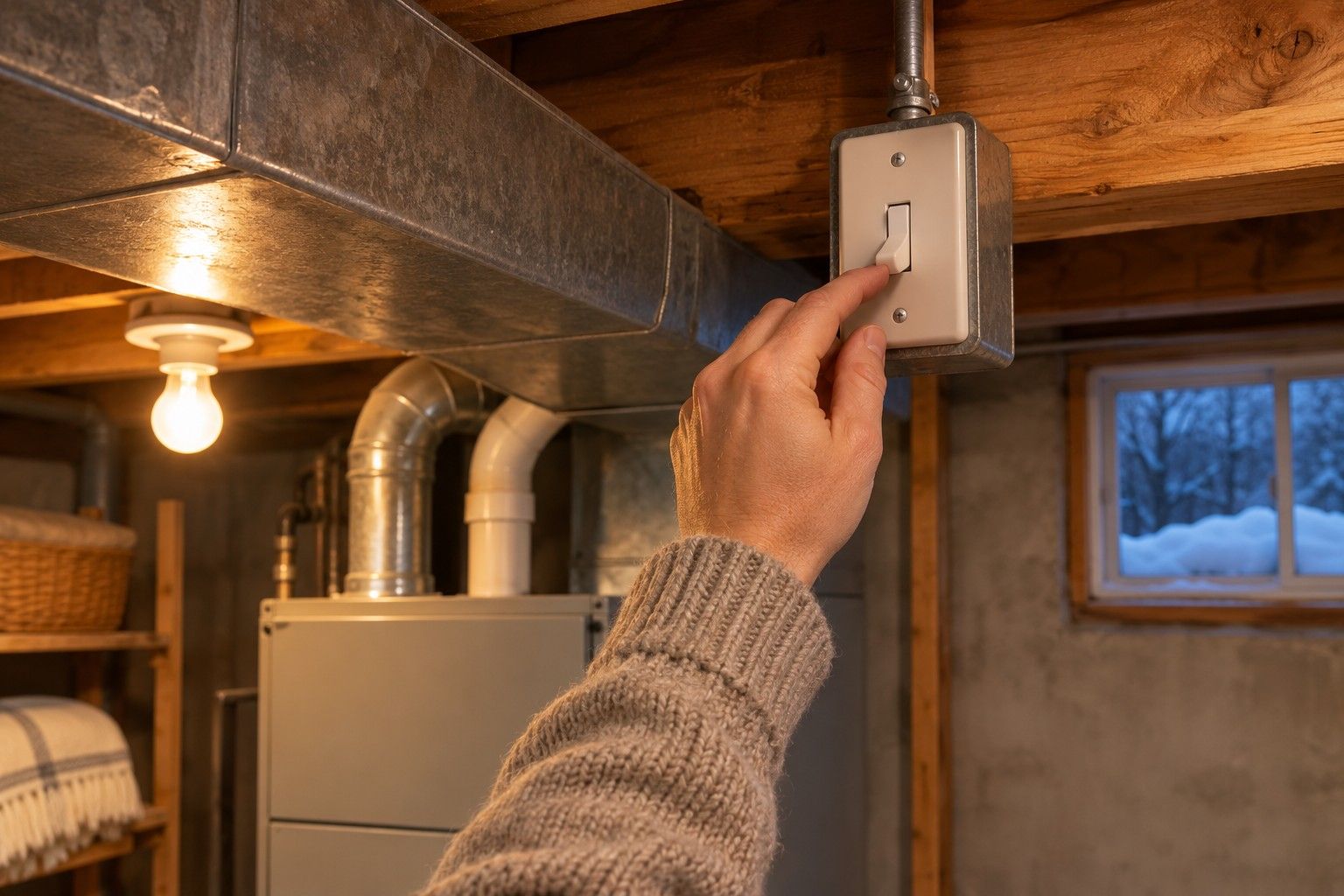
1 min- Look on or near the furnace for a switch that looks like a regular light switch, often on the wall or a ceiling beam beside it.
- Make sure it's on. If it already is, leave it for now. You'll count the blinks before you try a reset.
Nice work. Easy one. A strip of tape over that switch keeps it from getting bumped again.
Breaker
2 min- Open your electrical panel and look for a breaker that's off or stuck in the middle. It may be labeled furnace.
- Push it all the way off, then back on, once.
If it trips again, stop and call. Trane says that means an electrical problem.
Nice work. Keep an eye on it. If that breaker trips again later, call.
Furnace doors
1 min- If someone just changed the filter or looked inside, press the doors firmly into place.
- Most furnaces have a door switch that keeps everything off while a door is loose.
Don't run the furnace with the doors off.
Filter
2 min- Slide the filter out and hold it up to a light.
- If it's gray or caked with dust, put in a new one. The arrow on its edge points toward the furnace.
- Carrier calls a dirty filter the most common furnace problem. It can make the furnace overheat and shut itself off.
Nice work. Write the filter size on the no-heat card at the bottom of this page so the next one is easy to buy.
Vents inside
2 min- Open the floor and wall vents.
- Move furniture, rugs and laundry off the big return grilles that pull air back to the furnace.
Pipes outside
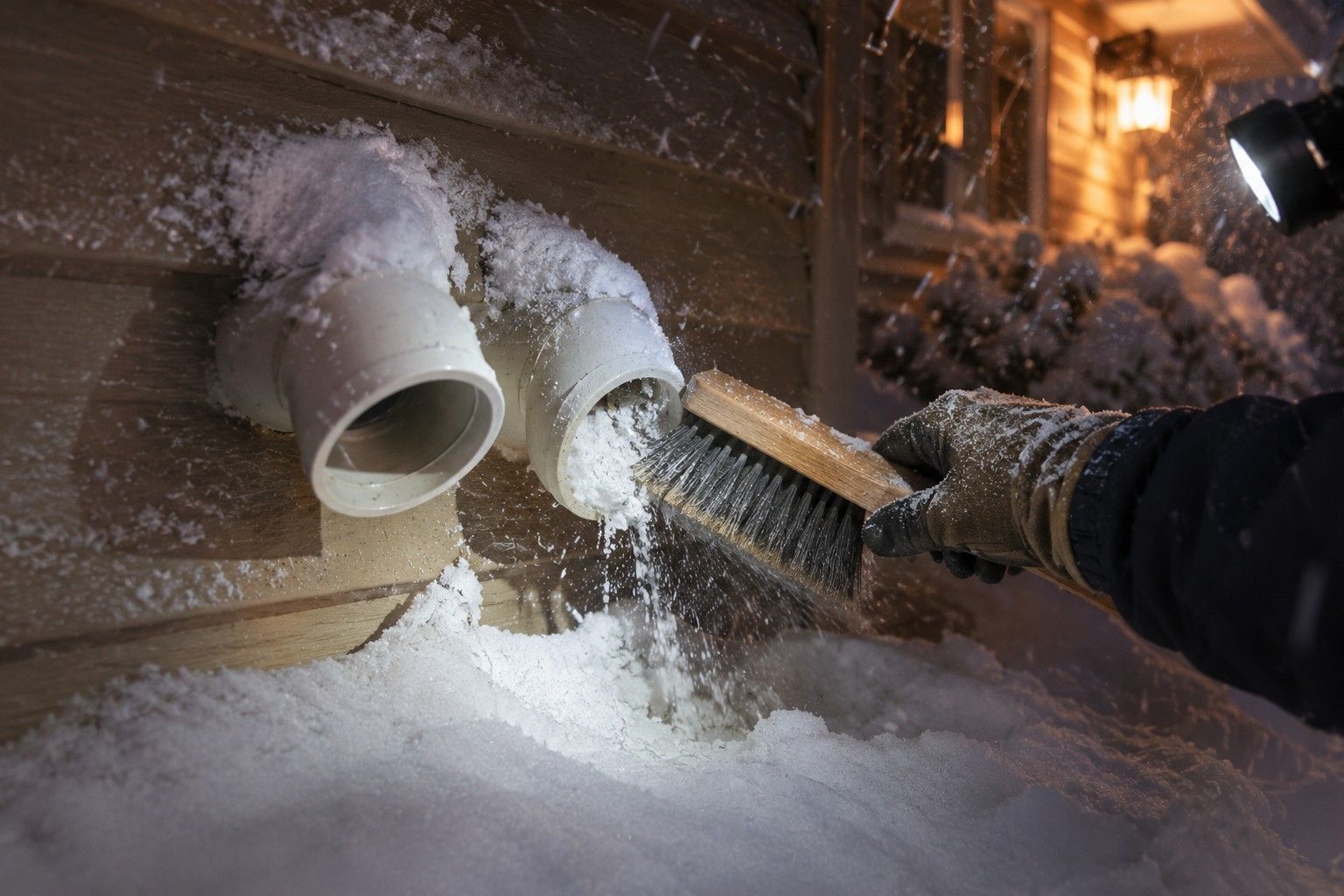
5 min- If your furnace has two white plastic pipes going out the wall, find their ends outside.
- Brush away snow and ice by hand or with a soft broom, not a shovel.
- Brush snow off the gas meter too, gently. Don't hit or kick it.
A blocked exhaust pipe can push carbon monoxide back into the house. If your CO alarm is sounding, get out first.
Nice work. After big storms and drifting wind, check those pipes again.
Drain line (high-efficiency furnaces)
2 min- High-efficiency furnaces make water and send it through a plastic tube to a floor drain or a small pump. Look for water on the floor, a full pump, or a tube that's kinked or frozen.
- If water is near wires, don't stand in it. Turn the furnace off at its switch or the breaker and call.
Gas
1 min- Is the stove or water heater working? If none of your gas appliances work, call Intermountain Gas.
- On the gas pipe going into the furnace, the valve handle should line up with the pipe. If it's turned crosswise and you don't know why, leave it and call.
Don't touch any valve inside the furnace. If you smell gas, leave.
Status light
2 min- Look through the little window in the lower furnace door.
- Count the blinks and write the number down before you turn anything off.
- Look up the number on the chart on your furnace door.
One reset
1 min- Turn the furnace switch off, wait at least 20 seconds, then turn it back on.
- Give it a few minutes to start up.
- Do this once. A furnace that fails to light a few times locks out, and some wait an hour before trying again on their own.
Don't press reset buttons inside the burner area or bypass any switch.
Still no heat? Time to call.
- Call a heating company (local list below). Tell them the furnace brand and model, the blink code and what you already checked.
- If it's bitter cold or someone at home is a baby, an older adult or has heart or lung disease, say so. At least one local company says it moves no-heat calls ahead of other work.
- While you wait, keep everyone warm and the pipes safe. The steps are below.
From furnace makers' manuals and support pages (Carrier, Bryant, Goodman, Payne, Trane, Lennox) and Intermountain Gas, linked at the bottom. General steps for a gas furnace. Your furnace's own manual comes first. Runs in your browser and saves nothing.
Old furnace with a pilot light? Carrier says to relight it by following your owner's manual, and never to try if you smell gas.
Can snow on the vent pipes stop my furnace?
If your furnace is a high-efficiency model, it breathes through two white plastic pipes on an outside wall: one brings air in, one pushes exhaust out. Drifting snow or ice can plug them overnight, and when that happens a safety switch keeps the burners off. Intermountain Gas warns that blocked vents can stop your equipment from working, and a blocked exhaust pipe can push carbon monoxide back into the house.
Intake pipe
Brings outside air to the burners. Clear the opening by hand or with a soft brush.
Exhaust pipe
Pushes exhaust out. Clear snow and ice from the opening gently, and clear about 3 feet around both pipes.
Gas meter
Brush snow off and clear icicles above it. Intermountain Gas warns that snow and ice can make the meter and regulator malfunction. Never hit it with a shovel or kick ice off it.
Keep snow below the pipes
Don't pile shoveled or blown snow against that wall. Check again during and after every storm.
Idaho Falls has its own rules for where you can push snow from your driveway and sidewalk. See Idaho Falls snow rules.
What does the blinking light on my furnace mean?
A blinking light on a furnace is a trouble code. Count the blinks between pauses and look up that number on the chart on your furnace door, because codes differ by brand. The light sits on the control board, and you can usually see it through a small window in the lower door. Count it before you turn anything off: Carrier's manual for one older model says to "Record the LED status code BEFORE removing the blower access door or turning off 115-v power to the furnace," because cutting power clears it on some furnaces.
Watch your furnace's little window. Each time the light blinks, tap the button. Stop when it pauses.
Waiting for the first blink.
Codes differ by brand and model, so this tool only counts. The meaning is on the chart on your furnace door. Payne's manual says to "refer to service label located on control door." Runs in your browser and saves nothing.
Look up your number on that chart, and use only your own furnace's chart. If the code points to a pressure switch, the outside pipes and the condensate drain are the first things to check. If it points to the flame, ignition or a lockout, it's usually a call. Either way, the number saves the tech time.
Is it safe to reset my furnace?
Usually, once, if you don't smell gas, no CO alarm is going off and the breaker hasn't tripped again. To reset a furnace, turn off the furnace switch, wait at least 20 seconds (Goodman's manual), and turn it back on. Then give it a few minutes.
- Do it once. Trane says a furnace that fails to light locks out after a few tries. Goodman's control resets itself after a one-hour lockout, and its manual says a furnace that locks out often has a problem that needs fixing.
- Don't press buttons inside the burner area, and never bypass a switch. Some furnaces have a rollout or limit switch with a reset button. Trane says don't reset or bypass a limit switch, and Bryant says repeated shutdowns need a pro. These trip for a reason.
What's wrong with my furnace?
Still stuck, or seeing something odd? Pick what your furnace is doing and you'll get the next steps, along with what the usual fix costs if it comes to that.
This tool needs JavaScript. The same steps are written out in the section below.
Pick the closest one
If you smell gas or a carbon monoxide alarm is going off, stop here and get everyone outside first.
Is the thermostat fan set to On or Auto?
Most thermostats have a fan setting next to the Heat, Cool and Off settings.
What do you notice?
Start with power
- Tap the thermostat screen. Some smart thermostats go dark when nobody walks by. Put in fresh batteries if it takes them.
- Find the furnace switch, on or near the furnace. It looks like a light switch. Make sure it's on.
- Check the breaker panel. Reset a tripped breaker once. If it trips again, stop and call: Trane says that means an electrical problem.
- If someone just changed the filter, push the furnace doors firmly shut. A door switch keeps the furnace off while a door is loose.
- Still dark? Call a heating company and say the thermostat has no power.
Work through the checks in order
- Set the thermostat to Heat, a few degrees above the room temperature, with the fan on Auto.
- Check the furnace switch, the breaker and the furnace doors.
- Look at the filter, and clear snow from the two white pipes outside.
- Count the blinks on the status light and write the number down.
- Try one reset: furnace switch off for at least 20 seconds, then on.
- Still nothing? Call. National cost guides put a service call at about $75 to $200.
That may be normal
- With the fan set to On, the blower runs all the time, even between heating cycles, so you feel cool air.
- Set it to Auto. The fan will run only while the furnace is heating.
- If the air is still cold after the furnace runs a few minutes, go back and pick Auto.
Cold air usually means the burners shut off or never lit
- Give it a few minutes. Lennox says the air can feel cool at first while the ducts warm up.
- Change a dirty filter. A clogged filter can make the furnace overheat, and a safety switch shuts the burners off while the fan keeps running.
- Clear snow from the outside pipes and look for water or ice at the condensate drain.
- Count the blinks on the status light.
- Still cold? Call. The tech will likely check the flame sensor, igniter and limit switch. National guides put each at roughly $75 to $350.
It's trying to light and can't
- Check that the handle on the gas pipe going into the furnace lines up with the pipe, and that your stove or water heater works. Don't touch any valve inside the furnace.
- Clear snow and ice from the outside pipes.
- Count the blinks on the status light and write the number down.
- Turn the furnace switch off for at least 20 seconds, then back on, once. Many furnaces lock out after a few failed tries.
- Still won't light? Call. Carrier says the igniter is one of the parts that fails first. National guides put a new one at about $150 to $350.
Lights, then quits: often a dirty flame sensor
- When the burners light and shut off a few seconds later, the furnace usually can't confirm its own flame. A dirty flame sensor is the common cause.
- Check the outside pipes and the condensate drain too. A blocked vent or drain can shut the burners off.
- Write down the blink code.
- Call. Furnace makers point owners to a technician for the flame sensor. National guides put cleaning or replacing it at about $75 to $250.
Starting and stopping usually comes down to airflow or venting
- Change the filter. Carrier says dirty filters are one of the leading causes of a furnace that keeps turning off and on.
- Open the floor vents and clear the big return grilles.
- Clear snow from the outside pipes. A furnace that keeps shutting off soon after it starts can mean a blocked vent.
- Still doing it? Call. Don't reset or bypass a limit switch, Trane says.
Count it, write it down, look it up
- Count the blinks before you turn anything off. On some furnaces, cutting the power clears the code.
- Find the code chart. It's usually on a label on the furnace door.
- Use only your own furnace's chart. Brands use different codes.
- Give the number to the tech when you call. The blink counter on this page can help you count.
Water usually comes from the condensate drain
- Put down towels or a bucket.
- If water is near wires or the control board, turn the furnace off at its switch or the breaker.
- On a high-efficiency furnace (the kind with white plastic pipes), look for a full condensate pump, a kinked or frozen drain line, or a drain tube that slipped out of the floor drain.
- A humidifier mounted on the furnace can leak too.
- Call if the drain or pump looks blocked or broken. Clearing a clogged line runs about $75 to $250, national guides say.
Get out now
- Get everyone out, including pets, and leave the door open behind you.
- Don't flip switches, unplug things, use a phone, or open or close windows inside. Don't smoke, light a match, use the garage door opener or start a car.
- From outside and away from the house, call Intermountain Gas at 800-548-3679 and call 911.
- Don't go back in until you're told it's safe.
Get outside, then call 911
- Get everyone outside to fresh air right away, pets too.
- Call 911 from outside.
- Don't go back in or run the furnace until it's been checked.
Probably dust burning off
- Trane says a dusty smell when the heat first comes on usually isn't a cause for concern.
- Let it run about 10 minutes. If the smell fades, you're likely fine.
- If it lasts or gets stronger, turn the furnace off and call.
Turn it off and call
- Trane says a burning electrical smell from a furnace could mean a serious electrical problem.
- Turn the furnace off at the thermostat and at its switch.
- Call a heating company. If you see smoke or flames, get out and call 911.
Turn it off and call
- A boom when the burners light isn't normal. It can mean gas is building up before it lights.
- Turn the furnace off at the thermostat.
- Call a heating company and describe the sound.
- Light ticking and popping as the ducts warm up and cool down is a different thing, and usually normal.
Usually a daytime call
- A soft hum while the furnace runs is normal. Trane says buzzing isn't.
- A loose transformer, a failing capacitor or a worn blower motor can buzz.
- If the furnace still heats, a daytime call is usually fine. If it stops heating, call sooner. A capacitor runs about $100 to $250, national guides say.
Heat pumps act a little differently
- A cloud of steam and a whoosh from the outdoor unit is usually the defrost cycle. Trane calls it perfectly normal.
- Light frost on the outdoor unit is normal. Ice covering the whole thing isn't. Don't chip at it or pour hot water on it.
- Carrier says to save emergency heat for when the heat pump fails or can't keep up, since it costs more to run.
- If the ice doesn't melt within 6 to 8 hours (Lennox's line) or the house won't warm up, call.
Built from furnace makers' pages and manuals (Carrier, Bryant, Goodman, Trane, Lennox), Intermountain Gas and CPSC. Costs are national ranges from cost guides, not Idaho prices. Runs in your browser and saves nothing.
| What you notice | What it often means | What to do |
|---|---|---|
| Nothing at all, blank thermostat | No power: batteries, furnace switch, breaker or a loose door | Check those four, then call |
| Fan runs, air is cold | Fan set to On, or the burners shut off from overheating, a blocked vent or drain | Fan to Auto, change the filter, clear the pipes |
| Clicks or hums, never lights | No gas getting through, blocked vent, or a worn igniter | Check the gas handle and pipes, one reset, then call |
| Lights, then shuts off in seconds | Often a dirty flame sensor | Clear the pipes, note the blink code, call |
| Runs, shuts off, starts again | Dirty filter, blocked vent, or a furnace that's too big | Change the filter, open vents, clear the pipes |
| Blinking light | A code from the control board | Count it and look it up on the door |
| Water on the floor | Condensate drain, pump or humidifier | Towels down, off if near wires, check the drain |
| Dusty smell, first time this fall | Dust burning off | Let it run 10 minutes |
| Rotten eggs | Natural gas | Get out, call from outside |
| Electrical burning smell | Possible electrical problem | Turn it off and call |
Why is my furnace blowing cold air?
A furnace blows cold air most often because the thermostat fan is set to On, so the fan runs between heating cycles. Set it to Auto, and the fan runs only while the furnace heats. If the fan is on Auto and the air stays cold, the burners either never lit or shut off while the fan kept running. Lennox lists the usual reasons: the first minute of a cycle before the ducts warm up, a dirty filter that makes the furnace overheat and shut off, an ignition or flame sensor problem, a blocked condensate line, or low gas supply. The filter, the fan setting and the outside pipes are yours. Ignition and sensors are a tech's job.
Why does my furnace turn on and then shut off?
A furnace that turns on and then shuts off has usually tripped one of its own safety checks. How soon it quits tells you which one.
- Within a few seconds of lighting: usually the flame sensor. The furnace can't confirm the flame, so it shuts off the gas. Trane lists a dirty or failing flame sensor as a cause of lockouts. Write down the blink code and call.
- After a few minutes, over and over: often overheating from a dirty filter or blocked vents inside. Carrier says dirty filters are "one of the leading causes of furnace short cycling." A furnace that's too big for the house does it too.
- Soon after starting, after a snowstorm: check the outside pipes. A blocked vent trips the safety switch.
Why is there water around my furnace?
High-efficiency furnaces make water as they burn gas, and a plastic drain line carries it to a floor drain or a small pump. Carrier says a furnace can leak in winter from "a frozen condensate line or a clogged drain." A faulty condensate pump or a leaking humidifier can do it too. When the drain backs up, many furnaces shut the burners off on purpose.
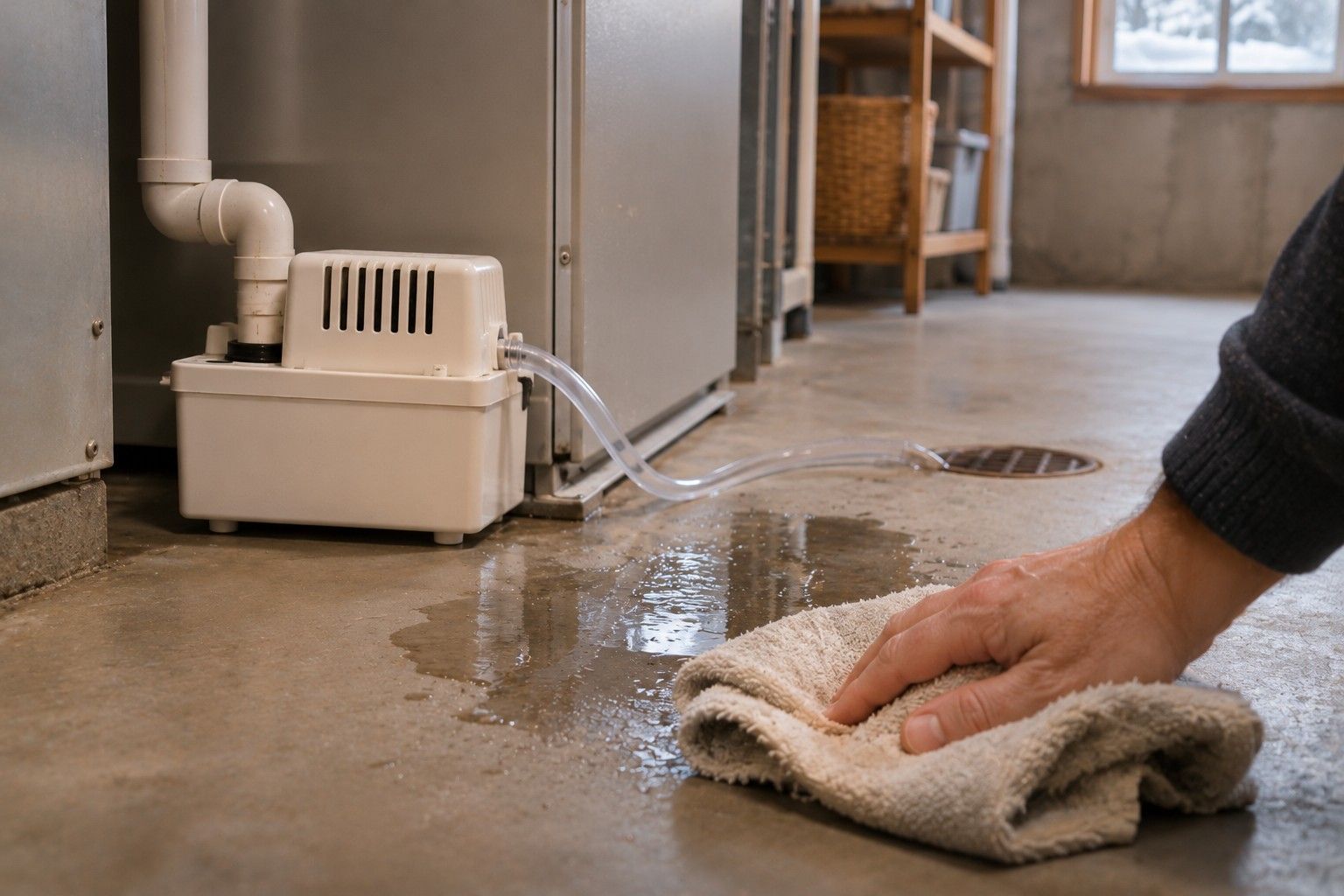
- Towels or a bucket first. Carrier says to catch the water before you do anything else.
- Turn it off if water is near wires. Carrier warns that water around electrical parts can be an electrical hazard. Use the furnace switch or the breaker.
- Look, don't take apart. A drain tube that slipped out of the floor drain, a kinked hose or a pump that hums but doesn't pump are things to tell the tech.
Which parts can I touch, and which are for a pro?
Here's what's inside a typical basement gas furnace and who should handle each part. Changing the filter is yours. Carrier's own advice: "Do not attempt to diagnose or repair gas, oil, combustion, or electrical components yourself."
Air filter: yours
Slide it out, look, put in a new one when it's dirty. It's the one part inside most owner's manuals say you can handle.
Blower: a tech's job
Pushes warm air through the house. If the filter sits behind the blower door, put that door back firmly when you're done.
Burners, igniter and flame sensor: a tech's job
You can look through the window if your furnace has one. The flame should be blue. Furnace makers point owners to a technician for cleaning or parts.
Heat exchanger: a tech's job
Keeps burner exhaust out of the air you breathe. A crack can let carbon monoxide into the house.
Inducer motor and pressure switch: a tech's job
The pressure switch keeps the burners off when the vent or drain is blocked. That's why clearing snow and drains fixes so many no-heat calls.
Vent pipes: clear the outside ends
You clear snow from the ends outside. The joints and slope at the furnace are for a tech.
Condensate drain: look, then call
High-efficiency furnaces make water. You can look for a kinked hose or a full pump. Fixing a clog or a pump is a tech's job.
Gas valve and gas line: look only
The handle on the gas pipe should line up with the pipe. Never touch the valve inside the furnace.
How do I keep my family and pipes safe while I wait?
A house holds its heat for a while, but Idaho Falls winters don't wait long. NOAA's numbers for the Idaho Falls airport put the normal January low at about 12°F, and December and January each average a dozen or more nights at 10°F or colder.
Stay warm safely
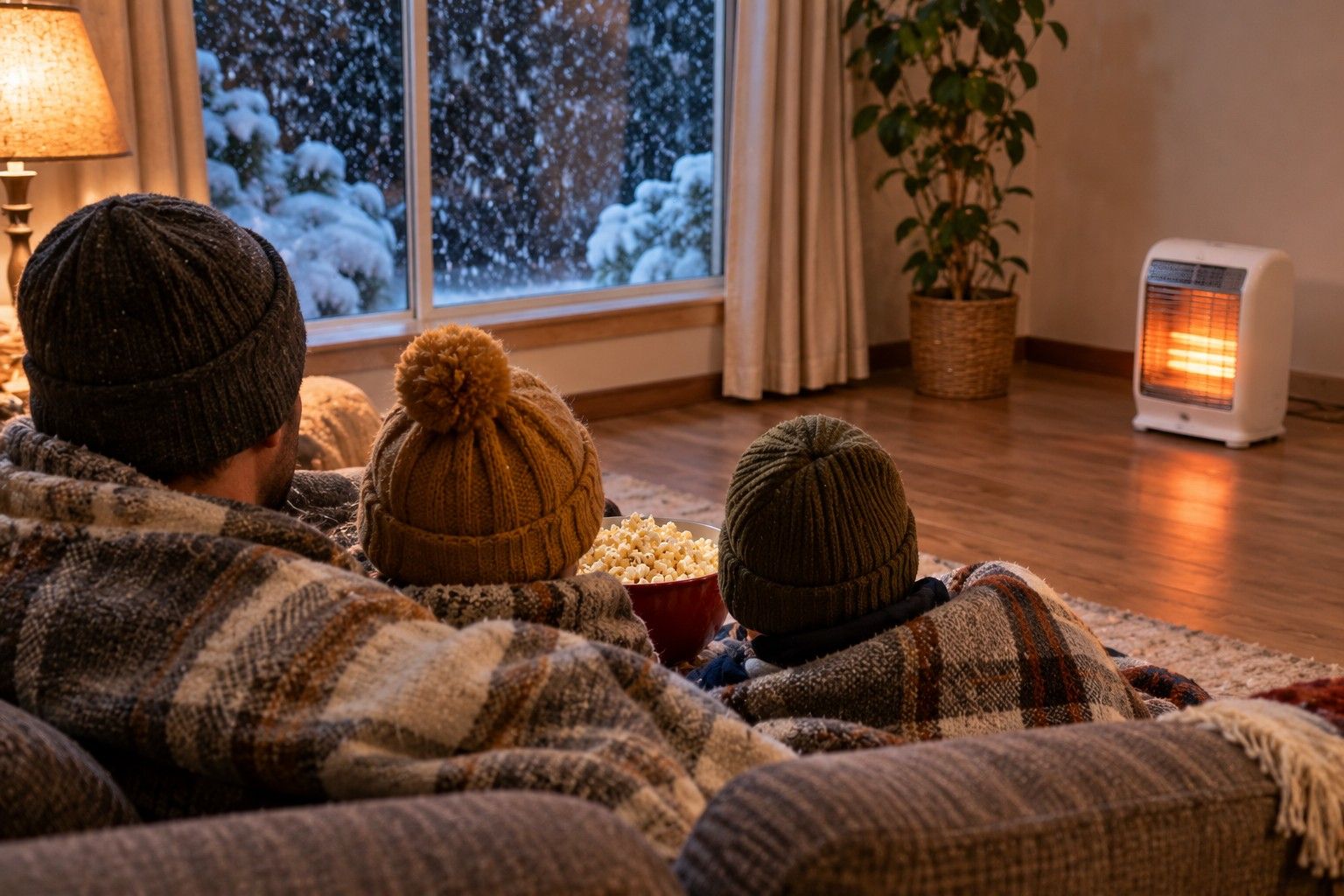
- Gather in one room. The CDC says to close off rooms you don't need, close the drapes or cover windows with blankets at night, and dress in layers.
- Space heaters, done right. Plug it straight into a wall outlet, never an extension cord or power strip (U.S. Fire Administration). Keep anything that can burn, plus kids and pets, at least 3 feet away. Turn it off when you leave the room or go to bed. Use one that shuts off if it tips over.
- Never the oven, grill or a generator inside. The CDC says "Don't heat your home with a gas oven" because of carbon monoxide. Never bring a grill or camp stove inside. CPSC says to run generators outside, at least 20 feet from the house, and that open doors and windows don't make it safe inside.
- Watch the people who get cold fastest. The CDC says babies should never sleep in a cold room. A National Institutes of Health release warns that homes at 60 to 65°F can trigger hypothermia in older people. If the house is falling into the low 60s and someone at home is a baby, an older adult or has heart or lung disease, go somewhere warm.
- Pets come inside. The American Veterinary Medical Association says that in extreme cold, even outdoor pets should stay inside.
Protect the pipes
Without heat, the pipes on outside walls and in crawl spaces go first. Open the cabinet doors under sinks on outside walls and let a thin trickle run from those faucets, as the CDC suggests. The full plan, including what to do if the water stops, is in Frozen pipes in Idaho Falls.
Need somewhere warm? Idaho Housing's warming center list from last winter shows the Idaho Falls Rescue Mission running a day shelter from 8 a.m. to 2 p.m. when it's below freezing, at (208) 419-0547. Call first to make sure it's open. Libraries and stores work for a few warm hours too.
What if the power is out, or I have a heat pump?
A gas furnace needs electricity to run its igniter, controls and fans, so a power outage means no heat even with gas in the line. When the power comes back, the furnace should start again on its own. In Idaho Falls, report outages to Idaho Falls Power at (208) 612-8430. Some homes in Idaho Falls, and most outside it, get power from Rocky Mountain Power instead. Its outage number is on your bill.
Heat pumps look and sound different in winter. Trane says a cloud of steam and a whoosh from the outdoor unit during a defrost cycle is "perfectly normal." Light frost is normal; ice covering the whole unit isn't. Lennox says not to chip ice off or pour hot water on it, and to call if the ice doesn't melt within 6 to 8 hours. Emergency heat is for when the heat pump fails or can't keep up, Carrier says, and it costs more to run.
What should I tell the company when I call?
The more you can tell them, the shorter the visit. Trane suggests writing down any lights or error codes you saw. Keep this list next to the phone.
Your no-heat call list
Tell them
- "My furnace is a [brand], model [number], about [age] years old."The brand and model are on a label inside the furnace door.
- "It's [blank screen / blowing cold air / lighting then shutting off / clicking]."The symptom points them to the likely part, so they bring it.
- "The light is blinking [number] times."The blink code is the furnace telling them what it noticed.
- "I already checked the thermostat, switch, breaker, filter and the pipes outside."Then they won't spend paid time on the easy stuff.
- "We have [a baby / an older adult / someone with a health condition] at home."At least one local company says winter no-heat calls move ahead of scheduled work.
Ask them
- "What's your service call or diagnostic fee, and is it more tonight or this weekend?"Most local companies don't post it, so ask before they come.
- "Does that fee go toward the repair if I have you fix it?"At least one local company says it does.
- "When can you get here?"If it's a while, ask about another company or keep the list below handy.
- "Will you tell me the cost before you start the repair?"Then you can decide before any work starts.
From eastidahopros.com, checked November 2, 2026. General information, not repair advice.
How much does furnace repair cost in Idaho Falls?
Most Idaho Falls furnace companies don't post prices. National cost guides put a service call at $75 to $200, and common no-heat repairs like a flame sensor or igniter at about $75 to $350. Angi puts the average furnace repair at a little over $300 nationally. Prices here may run different, so use these to know roughly what's normal and ask for a price before work starts.
- Service call or diagnostic$75 to $200Usually covers the first hour or so
- Clogged condensate line cleared$75 to $250
- Flame sensor, cleaned or replaced$75 to $250
- Thermocouple (old pilot-light furnaces)$100 to $300
- Capacitor$100 to $250
- Igniter$150 to $350
- Limit switch$150 to $300
- Pressure switch$150 to $400
- Thermostat replaced$150 to $500
- Gas valve$200 to $800
- Control board$200 to $800
- Draft inducer motor$400 to $1,100
- Blower motor$300 to $1,500Some variable-speed motors run higher
Parts and labor, from 2024 to 2026 national cost guides: Angi, Filterbuy, Modernize, HomeGuide, HomeAdvisor, Fixr, PickHVAC and Pick Comfort. Each bar is a range at least two guides roughly agree on. National, not Idaho prices.
| Company | What it posts | Note |
|---|---|---|
| Advanced Home Services | $39 furnace repair diagnostic offer | No terms shown. Says night and weekend calls may cost more |
| Falls 2 Falls | A flat after-hours rate | The amount isn't posted |
| First Street Plumbing & Heating | No extra fee for after-hours calls | No diagnostic price posted |
| Ridgeline Heating and Cooling | $100 diagnostic fee | Covers the first hour, and goes toward the repair if you go ahead |
| The other 13 on our list | No diagnostic or after-hours fee posted | Ask when you call |
Each company's entry below has a "Fix or remove this" link.
Nights and weekends cost more at most companies. National guides put emergency labor at roughly $140 to $250 an hour, or $40 to $80 an hour over the normal rate (HomeGuide). If the house is safe and the pipes can hold until morning, a daytime visit may save money. If not, call now.
Should I fix my furnace or replace it?
Carrier and Lennox both say a gas furnace usually lasts 15 to 20 years, and ENERGY STAR says to start thinking about replacing one that's "more than 15 years old" or needs frequent repairs. Two rules of thumb you'll hear: the $5,000 rule (multiply the furnace's age by the repair cost; over $5,000, lean toward replacing), which CBS News described in June 2026 without saying where it came from, and the 50% rule (replace when a repair costs more than half a new furnace), which Lennox uses. Neither is a standard. Try your numbers:
This tool needs JavaScript. The same rules are written out in the text above.
We started with $6,000. DR Heating & Plumbing posts starting prices of $4,500 to $7,200 and up for a new furnace on existing ducts, depending on efficiency (checked October 27, 2026). Change it to the quote you got.
The $5,000 rule
The 50% rule
ENERGY STAR's age line
These are rules of thumb, not advice. A safe furnace that runs well doesn't need replacing because of its age. Runs in your browser and saves nothing.
If a tech says the heat exchanger is cracked or the furnace isn't safe to run, ask to see it and get it in writing. Our furnace tune-up guide covers how to check that call, get a second opinion, and handle a new furnace quote, including permits and your right to cancel.
Can I get help paying for heat or a repair?
Yes, and it's worth a call before the bill gets big.
- Eastern Idaho Community Action Partnership (EICAP) runs heating help for Idaho Falls and the area: 208-522-5391 or 800-632-4813. That includes LIHEAP, the federal heating bill program. Idaho Health and Welfare says families with children under 6 or elderly or disabled members can apply starting in October, and everyone else in November. There's also crisis help to keep the heat on or turn it back on. EICAP also runs Project Warmth, a heating fund paid for by Intermountain Gas customers.
- Weatherization can fix or replace a furnace. Idaho Health and Welfare lists "repairing or replacing primary heating sources" among weatherization services for qualifying households. Signing up and getting the work done can take a few months, so it's for next winter, not tonight.
- Winter shutoff protection. Intermountain Gas says households with children, elderly or infirm members who tell it they can't pay in full won't be disconnected for nonpayment in December, January, February or March. Call Intermountain Gas at 800-548-3679, or the Idaho Public Utilities Commission at 1-800-432-0369.
- 211 Idaho CareLine connects you to local help: dial 211 or 800-926-2588, weekdays 8 a.m. to 6 p.m.
If you rent
In Idaho, a landlord has to keep the heating that came with the place in good working order (Idaho Code 6-320). Call or text your landlord right away, then put it in writing. If it isn't fixed within three days of written notice, the law lets a tenant take it to court. The Idaho Attorney General's landlord and tenant manual says Idaho law doesn't let tenants hold back rent or pay for the repair and deduct it. Read your lease too. General information about Idaho law as of November 2, 2026, not legal advice.
Which companies fix furnaces in Idaho Falls and Ammon?
These local companies say on their own websites that they repair furnaces and serve Idaho Falls. They're in alphabetical order, and nobody paid to be here. We don't check licenses, insurance or the quality of anyone's work, and being on this list isn't a recommendation. "24/7" means the company's own site says so; call to confirm tonight's availability and price. You can look up an HVAC license on the Idaho DOPL license search.
Show companies whose sites
Advanced Home Services
Idaho Falls, Ammon, Rigby, Rexburg, Shelley, Pocatello and more
Heating, plumbing and electrical. Its furnace repair page posts a $39 furnace repair diagnostic offer, with no terms shown. Its emergency page says it keeps a staffed dispatch line after hours, and that night and weekend calls may cost more.
From the company's own website, checked November 2, 2026. Fix or remove this
Alpine Heating & Air Conditioning
Idaho Falls
Lists 24 hour, 7 day emergency service and same-day service on all makes and models. No prices posted.
From the company's own website, checked November 2, 2026. Fix or remove this
Big Foot Heating & Cooling
Idaho Falls, Rigby, Rexburg, St. Anthony, Driggs and more
Offices in Idaho Falls and St. Anthony with weekday office hours. Its contact page says to call 24/7 for service. No prices posted.
Emergency service hotline: (208) 745-3258
From the company's own website, checked November 2, 2026. Fix or remove this
Conan Heating & Air Conditioning
Idaho Falls, Ammon, Rigby, Rexburg, Shelley and many more
Says it has served the area since 1947. Lists 24/7 emergency service at its main number and does emergency furnace repair. No repair prices posted.
From the company's own website, checked November 2, 2026. Fix or remove this
Cutting Edge HVAC
Idaho Falls, Ammon and more
Says it offers 24-hour furnace repair for urgent problems. No prices posted.
From the company's own website, checked November 2, 2026. Fix or remove this
DR Heating & Plumbing
Idaho Falls, Ammon, Rigby, Shelley, Rexburg and about 30 more towns
Weekday hours, 8 to 5. Lists emergency plumbing and heating repairs. Its free estimates don't cover repairs or diagnostics, and it doesn't post those prices.
From the company's own website, checked November 2, 2026. Fix or remove this
Elite Comfort Systems
Idaho Falls, Ammon, Iona, Rigby, Rexburg and more
Furnace repair and installs. Says it prices by the job, not by the hour, and tries to fit emergency repairs in as soon as it can. No hours or prices posted.
From the company's own website, checked November 2, 2026. Fix or remove this
Falls 2 Falls Heating and Cooling Specialists
Idaho Falls, Ammon and much of Southeast Idaho
Weekday hours plus 24/7 emergency response. Says after-hours calls are one flat rate (the amount isn't posted) and that no-heat calls in winter move ahead of scheduled work.
From the company's own website, checked November 2, 2026. Fix or remove this
First Call Jewel Heating Cooling Plumbing & Electrical
Idaho Falls and Eastern Idaho
Heating, cooling, plumbing and electrical. Says emergency service is 24/7.
After-hours emergency line: (208) 313-4113
From the company's own website, checked November 2, 2026. Fix or remove this
First Street Plumbing & Heating
Idaho Falls and nearby towns
Plumbing and heating with an office in Idaho Falls. Says it does 24/7 emergency furnace repair with no extra fees for after-hours calls, and that it gives the repair price before work starts.
From the company's own website, checked November 2, 2026. Fix or remove this
High Country Heating & Air Conditioning
Idaho Falls, Rigby, Rexburg and nearby towns
Says it's available 24/7 for emergencies and offers same-day appointments.
From the company's own website, checked November 2, 2026. Fix or remove this
Idaho Furnace and Plumbing Source
Idaho Falls, Ammon, Rigby, Rexburg, Shelley and Blackfoot
Heating and plumbing. Says its emergency team is available 24/7 and offers same-day diagnostics. Its membership page lists no diagnostic fees or trip charges as a plan perk. Other prices aren't posted.
From the company's own website, checked November 2, 2026. Fix or remove this
Minuteman Electric & HVAC
Idaho Falls, Ammon, Rigby, Rexburg, Shelley and more
Electrical and heating. Lists emergency furnace repair but doesn't claim 24/7. Its plan ($25 a month or $310 a year) waives the diagnostic fee and, it says, includes same-day heating service for weekday calls made before 3 p.m.
From the company's own website, checked November 2, 2026. Fix or remove this
Poulsen Heating & Air
Idaho Falls, Ammon, Iona, Rigby, Shelley and more
Lists emergency furnace repair. No hours or prices posted.
From the company's own website, checked November 2, 2026. Fix or remove this
Ridgeline Heating and Cooling
Idaho Falls and much of Eastern Idaho
Posts a $100 diagnostic fee that covers the first hour and goes toward the repair if you go ahead. Says it does same-day work when it's urgent, and offers a free second opinion if another company says you need a new furnace.
From the company's own website, checked November 2, 2026. Fix or remove this
RSJ Mechanical
Idaho Falls, Ammon, Rigby, Rexburg, Shelley and more
Says it does emergency heating service day or night, though its posted office hours are weekdays.
From the company's own website, checked November 2, 2026. Fix or remove this
Sprinter Total Indoor Comfort
Idaho Falls area, based in Rigby
Says it offers 24/7 emergency repair. No prices posted.
From the company's own website, checked November 2, 2026. Fix or remove this
Not on the list? We list companies whose own websites say they repair furnaces for homes in the Idaho Falls area. If yours does and we missed it, email hello@eastidahopros.com.
Printable no-heat card
Print this, fill in the blanks with a pen on a warm afternoon, and tape it to the furnace or inside a kitchen cabinet. On the night you need it, everything's in one place.
Our no-heat card
- Gas smell? Get out, then call Intermountain Gas (24 hours)
- 800-548-3679
- Fire, CO alarm or someone sick
- 911
- Idaho Falls Power outages
- (208) 612-8430
- Our heating company
- Furnace brand and model
- Year installed
- Filter size
- Blink code we saw
Get out first if
- You smell rotten eggs (gas)
- A CO alarm is sounding
- People feel sick, dizzy or confused
- Call from outside
No heat? Check in order
- Thermostat: Heat, set higher, fan Auto, batteries
- Furnace switch and breaker
- Furnace doors pushed shut
- Filter
- White pipes outside: clear snow
- Count the blinks, then one reset
While you wait
- One warm room, layers, blankets
- Space heater in a wall outlet, 3 feet clear
- Never the oven or a grill for heat
- Drip faucets on outside walls
From eastidahopros.com, checked November 2, 2026. General information, not repair advice.
Common questions
What is the first thing to check when my furnace stops working?
The thermostat. Make sure it's set to Heat, the temperature is set above the room temperature, and the batteries are good. Then check the furnace switch (it looks like a light switch on or near the furnace), the breaker and the filter. Bryant says the most common causes are the simple ones: a thermostat setting, a tripped breaker or a clogged filter.
Why does my furnace click but not turn on?
It's trying to light and can't. Check that the gas valve handle on the pipe to the furnace lines up with the pipe and that your other gas appliances work, clear snow from the outside pipes, and count the blinks on the status light. After a few failed tries, many furnaces lock out. If one reset doesn't fix it, call. A worn igniter is a common part to fail.
Can a dirty air filter stop my furnace from working?
Yes. Carrier calls a dirty or clogged filter the most common furnace problem. It chokes the airflow, the furnace overheats, and a safety switch shuts the burners off. Hold the filter up to a light. If it's gray or caked, put in a new one.
Can I clean the flame sensor myself?
Plenty of how-to videos show it, but furnace makers like Lennox, Trane and Carrier point owners to a technician. It means shutting off the gas and power and taking a part out of the burner area. That's work in the burner area, so leave it to a technician. National cost guides put a flame sensor cleaning or replacement at about $75 to $250.
Is no heat an emergency?
It can be. Call right away if you smell gas or a carbon monoxide alarm sounds (get out first), or if someone at home is a baby, an older adult or has heart or lung disease and the house is getting cold. Idaho Falls averages a January low of about 12°F, cold enough to freeze pipes. Otherwise, try the safe checks first.
How cold is too cold inside without heat?
The World Health Organization calls 64°F (18°C) a safe indoor temperature and says older people and children may need it warmer. A National Institutes of Health release warns that homes at 60 to 65°F can trigger hypothermia in older people, and the CDC says babies should never sleep in a cold room. If the house is dropping into the low 60s, go somewhere warm.
How much does a furnace service call cost in Idaho Falls?
Most local companies don't post one. Of those we checked, Advanced Home Services posts a $39 furnace repair diagnostic offer and Ridgeline posts a $100 diagnostic fee. National cost guides put a service call at about $75 to $200, with nights and weekends costing more.
Is it worth fixing a 15-year-old furnace?
It depends on the repair. Carrier and Lennox say gas furnaces usually last 15 to 20 years, and ENERGY STAR says to start thinking about replacing one that's more than 15 years old. Two rules of thumb you'll hear: the $5,000 rule (age times repair cost) and the 50% rule (the repair costs more than half a new furnace). Neither is a standard.
What should I do if I smell gas near my furnace?
Get everyone out, including pets, and leave the door open behind you. Don't flip switches, unplug things, use a phone or open or close windows inside. Don't smoke, light a match, use the garage door opener or start a car. From outside and away from the house, call Intermountain Gas at 800-548-3679 and call 911. Don't go back in until you're told it's safe.
Can I use my oven or a grill to heat the house?
No. The CDC says using a gas oven to heat your home puts your family at risk for carbon monoxide poisoning. Never bring a grill, camp stove or generator inside, even with the windows open. CPSC says to run a generator outside, at least 20 feet from the house.
Where this comes from
We checked everything on November 2, 2026. Safety steps come from Intermountain Gas and federal safety agencies, the homeowner checks from furnace makers' own manuals and support pages (labeled as makers), costs from national cost guides (labeled as national), and the companies from their own websites. We'll check it all again every October, before heating season.
Gas and carbon monoxide safety
- Intermountain Gas, Emergency Information (24-hour number and what to do if you smell gas)
- Intermountain Gas, monitor your meter and furnace vent areas and Meter Access and Safety
- CPSC, life-saving tips during power outages (December 7, 2021) and Protect Your Family from Carbon Monoxide Poisoning
- CDC, About Carbon Monoxide Poisoning and Don't Heat Your Home with a Gas Oven
- Poison Help line (HRSA)
- New Castle County, Delaware, Intake and Exhaust Clearance (revised January 22, 2026)
- Red tags: Peoples Gas, Safety Tags (a Pennsylvania utility) and Direct Energy, gas safety
Furnace makers (homeowner checks, codes and resets)
- Carrier, Furnace Troubleshooting Guide (October 13, 2026), Furnace Not Turning On, Furnace Leaking Water and Furnace Short Cycling
- Bryant, Why Is My Furnace Not Turning On? and the Bryant condensing furnace owner's manual
- Goodman gas furnace User's Information Manual (door switch, lockout, reset, blink codes)
- Payne PG95 furnace manual and Carrier 58MSA user's manual (status codes)
- Trane: Furnace Not Turning On, Furnace Light Blinking, Furnace Limit Switch, Hard Lock Out, Buzzing Noise, Burning Smell and Heat Pump Defrost Cycle
- Lennox: How to Fix a Furnace Blowing Cold Air, Heat Pump Frozen and How Long Does a Furnace Last?
- Carrier, What Is Auxiliary Heat? and Google Nest Help, when your thermostat won't turn on
- Flame sensor cleaning by homeowners: Homes & Gardens (December 5, 2025). Delayed ignition: Angi (commercial)
Staying warm and safe
- CDC, Safety Guidelines During and After a Winter Storm
- U.S. Fire Administration, Heater Fire Safety and American Red Cross, safe home heating (January 14, 2026)
- Idaho Falls Fire Department, winter fire risks (January 2, 2026)
- National Institutes of Health, Hypothermia: a cold weather hazard for seniors (February 15, 2006) and WHO Housing and Health Guidelines, low indoor temperatures (2018)
- American Veterinary Medical Association, Cold Weather Safety
- Idaho Housing and Finance Association, warming centers list (Idaho Falls Rescue Mission)
- Wisconsin Department of Health Services, utility service interruptions (furnaces and power outages)
- Manitoba Hydro, Be prepared (a Canadian utility; gas furnaces and power outages)
Weather, power and local help
- NOAA 1991 to 2020 climate normals, Idaho Falls Regional Airport (nights at 10°F or colder) and normal lows
- City of Idaho Falls, prolonged winter outages (March 2, 2024; Idaho Falls Power outage line) and Idaho PUC on Idaho Falls Power and Rocky Mountain Power service areas (December 6, 2018)
- Intermountain Gas, assistance programs, Project Warmth and Rights and Responsibilities (July 2025; winter protection)
- Idaho Health and Welfare, About Heating Assistance, winter home and utility help (weatherization), and Local News 8 on EICAP weatherization (May 7, 2026) and 211 Idaho CareLine
- City of Idaho Falls, Utility Assistance (EICAP) and Idaho Public Utilities Commission, FAQ
- Idaho Code 6-320 and the Idaho Attorney General, Landlord and Tenant Manual (July 2026)
- Idaho DOPL license search
Costs and repair or replace
- Angi, furnace repair cost (checked November 2, 2026), Filterbuy, furnace repair cost by part (October 11, 2026) and Modernize, furnace repair cost (August 12, 2026)
- HomeGuide, HVAC repair cost, HomeAdvisor, furnace repair cost, Fixr, furnace repair cost (August 29, 2025) and PickHVAC, furnace parts replacement cost (May 25, 2026) and Pick Comfort, furnace condensation leak repair cost (September 12, 2025)
- CBS News, What is the $5,000 rule for HVAC systems? (June 24, 2026) and ENERGY STAR, when is it time to replace?
- DR Heating & Plumbing's posted replacement prices: its HVAC page (checked October 27, 2026)
Local companies
- Each company's own website, linked in its entry above
Every furnace is different, and this page isn't a repair manual. Follow your furnace's own manual and labels, and when in doubt, call a pro. Phone numbers, programs and prices change, so check before you count on them. Spot something out of date? Email hello@eastidahopros.com and we'll fix it.
Still have a question?
Ask your neighbors in Ask East Idaho, our free Facebook group for Idaho Falls, Ammon, Rexburg, Pocatello and nearby towns. Good questions there help us decide which guide to write next.
You need a Facebook account to join. It's a private group, so only members see posts. When you ask to join, we ask you to agree to the group's rules and answer two quick questions: which part of East Idaho you're in or curious about, and what you're hoping to find. We never ask for your email or phone number.