On this page
- Is this worry normal?
- What does the research say?
- How do kids become friends?
- Friendship at each age
- What kind of group fits my kid?
- Where families meet (18 places)
- Public school sports and clubs
- Faith-based or not?
- Teens
- Shy, anxious or neurodivergent kids
- Busy but no close friends
- Out of town or the last one home
- Friends went back to school, or new here
- Group feels cliquey
- Start your own park day
- What to say
- What if I'm lonely too?
- When to try a different plan
- Your friend plan
- Common questions
- Where this comes from
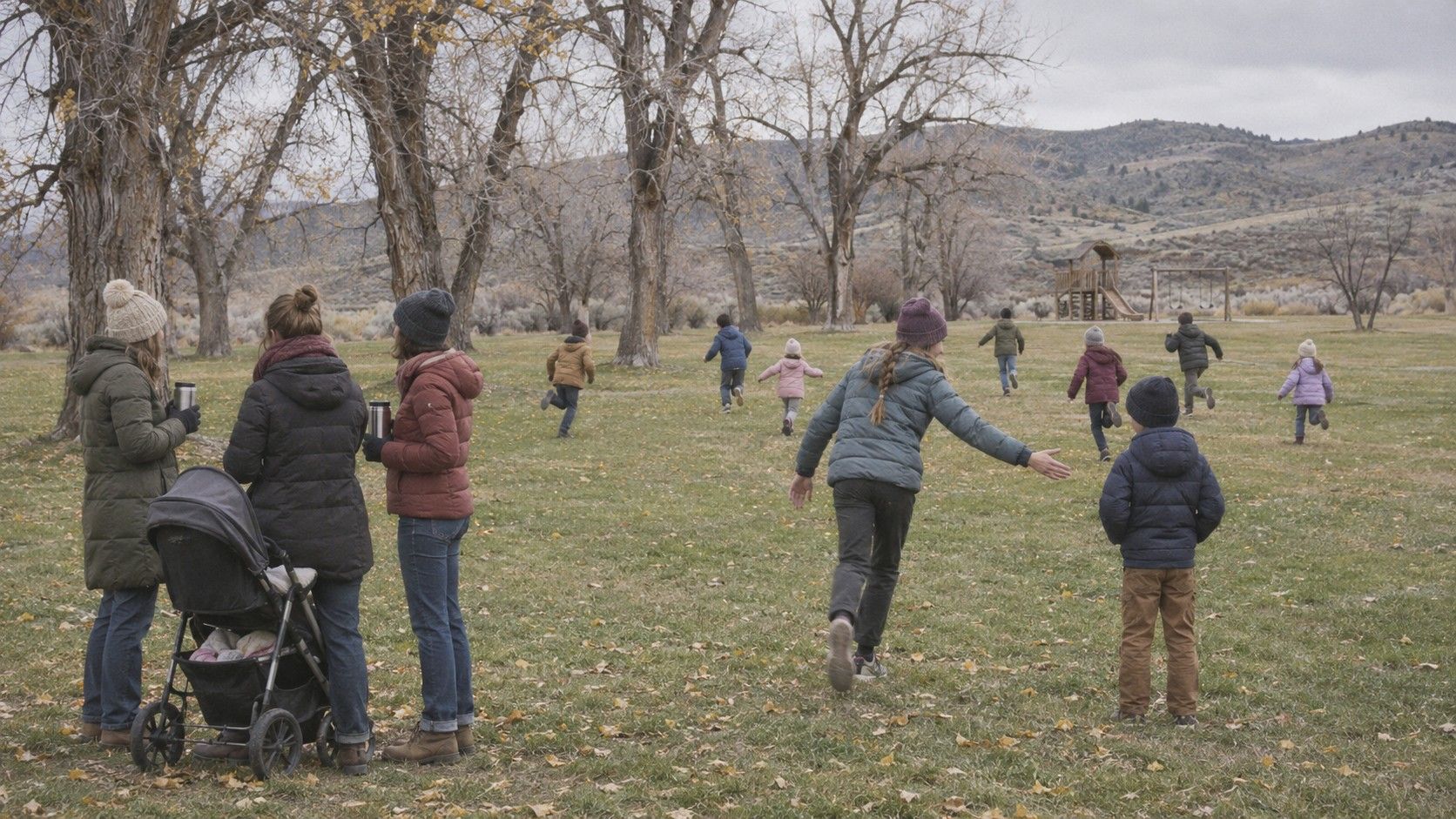
Research says homeschooled kids do fine socially on average. The ones with more regular peer time do best. And if you're lonely too, you're in good company. There's a section for you below.
Is it normal to worry this much about my kid's friends?
Yes. If you homeschool, someone has asked you about "socialization," probably at Thanksgiving. And somewhere along the way you started asking it too, usually late at night.
You're not the only one. In a big Idaho Falls Facebook group, the same kinds of posts come up again and again, from families new to town looking for buddies for a little one to kids who want to go back to school to see friends.
Homeschooled kids can have great friendships. They just don't fall out of the school schedule. You have to build the time for them on purpose, and that's a lot of work for one parent.
We looked up every group, program and rule on November 3, 2026, on each group's own website or Facebook page and on city, library, school district and state pages. We don't check who leads a group or how it's run. Nobody paid to be here, and being listed isn't a recommendation. This is general information, not medical or legal advice.
Do homeschooled kids really have trouble making friends?
On average, no. But the average hides the part that matters.
Psychologist Richard Medlin reviewed the research in 2000 and again in 2013. He found homeschooled kids, on average, rate their own social skills about like other kids, and wrote that an alarmist view "is not supported by empirical research." Robert Kunzman and Milton Gaither did a large review (2020, drawing on more than 2,000 studies, articles and books). They found homeschoolers "do not seem to suffer" on social skills compared with kids in school.
The same review also found two things worth hearing. Some homeschoolers say they feel more socially isolated. And homeschoolers "with more peer interactions generally fared better" than homeschoolers with fewer. So the worry makes sense, and the fix is what you'd guess: more regular time with other kids.
How much to trust this. Most homeschool studies use small groups of families who volunteered, and a lot of it is self-report. Medlin and Kunzman and Gaither both say so. We couldn't find a big, recent study of homeschooled kids' loneliness in the US, and Idaho doesn't even count its homeschoolers. Read it as "most kids do fine, and kids with regular peer time do best."
It also helps to remember this isn't only a homeschool problem. The US Surgeon General's 2023 advisory on loneliness found that time young people (15 to 24) spend with friends in person dropped by nearly 70% over almost two decades. Lots of kids in school are lonely too.
How do kids actually become friends?
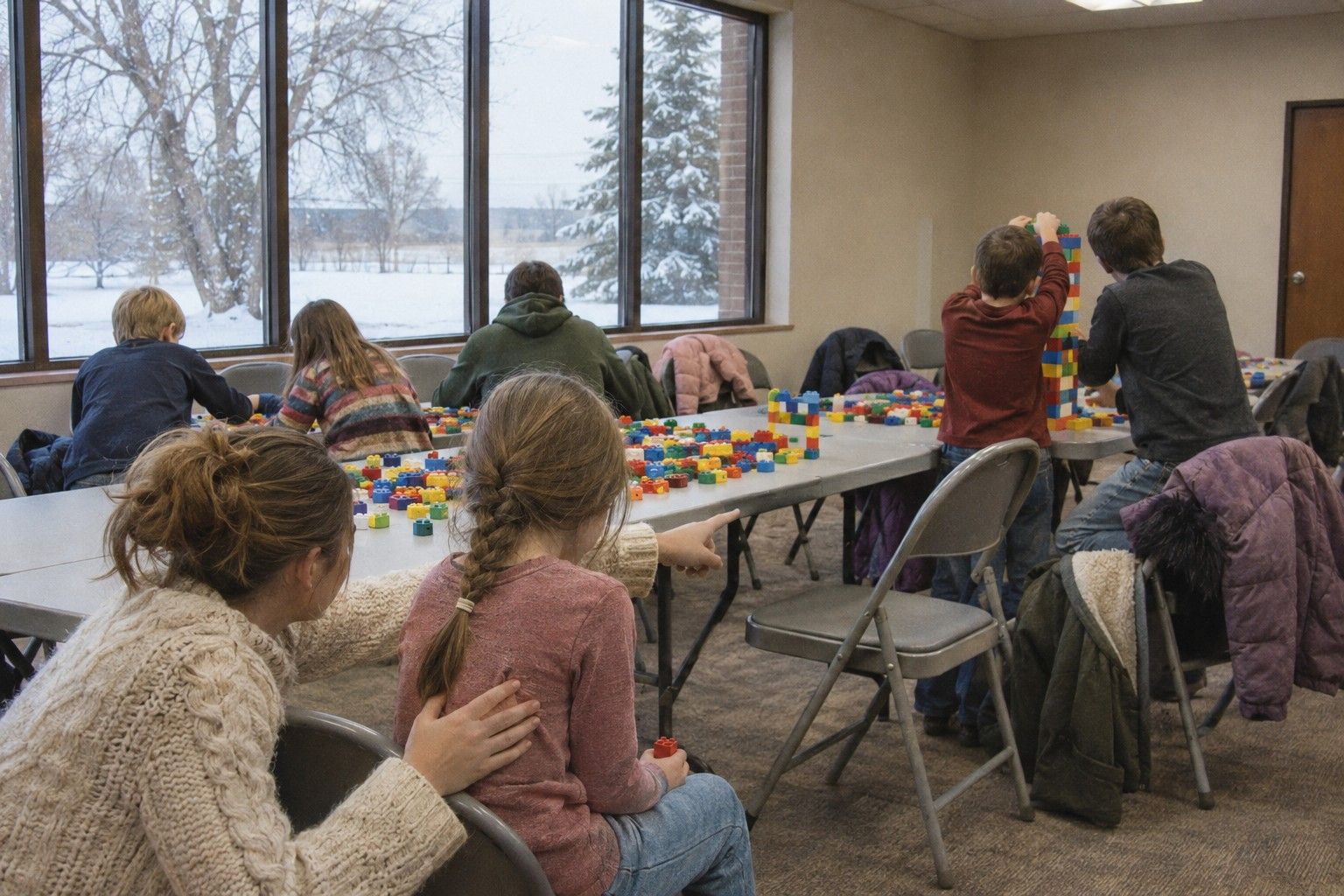
Two things, mostly. Being near the same kids over and over, and doing something together they both enjoy.
The "over and over" part is bigger than most of us think. Communication researcher Jeffrey Hall at the University of Kansas studied how long friendships take. His estimates: about 40 to 60 hours together to become casual friends, 80 to 100 hours to become friends, and more than 200 hours to become close friends. Hanging out, joking and playing counted more than working side by side. Hall studied adults and college freshmen, not kids, so treat the numbers as a rough guide. But the shape fits kids too. In a study of 235 kids in grades 3 to 5, kids who sat near each other in class were much more likely to become friends.
School gives kids those hours by default. Homeschooled kids have to get them some other way. Try the tool below to see how your week adds up.
How long until they're friends?
Tap what your kid does each week with the same kids. Different kids every time doesn't add up the same way.
0 a week with the same kids
Casual friend about 50 hours together
Pick something above
Hall found about 40 to 60 hours. Kids know each other's names and look for each other.
Friend about 90 hours together
Pick something above
About 80 to 100 hours. They save a seat, ask to come over, miss each other when one is gone.
Close friend about 200 hours together
Pick something above
More than 200 hours. The kind of friend they tell things to.
Hours are our own rough numbers for a typical week. The hour marks are Jeffrey Hall's estimates from adults and college students (published 2018 and 2019). Kids may click faster or slower. Runs only in your browser and saves nothing.
Being in the same room usually isn't enough. Hall put it simply: "You can't make people spend time with you, but you can invite them." Friendships usually get going when someone takes them outside the activity.
Same place, same time
Show up to the same group, again and again. One-time events are fun but rarely make friends on their own.
Names and hellos
Help your kid learn two or three names. Say hi to the same parents. Repeat.
Play together there
At the activity, they start to pair up, save a spot, laugh at the same things.
An invite outside the activityThe step that's easy to miss
Ask one kid (and their parent) to the park, your house or the library. Then do it again.
A real friend
They ask for each other by name. Now the friendship runs on its own steam.
For little kids, you're the one who does step 4. Gary Ladd and Craig Hart followed 83 preschoolers and found that kids whose parents set up more play dates had more friendly, helpful play. Kids whose parents let them help plan the play dates started more contacts on their own. So set it up, then let your kid help pick the snack and the game next time.
What does friendship look like at each age?
What counts as a friend changes a lot from age 4 to 14. Knowing what's normal for your kid's age can take some of the worry off.
| Age | What friendship looks like | What helps most |
|---|---|---|
| Ages 3 to 5 | Friends are the kids they play with right now, mostly pretend play. Lots of side-by-side play, quick fights and quick makeups. | You set up the play. Short play dates (an hour or so) with one kid, at a park or your house, with the same few families. |
| Ages 6 to 9 | Friends are kids they do things with and share with. A shared game or activity is the glue. | A weekly class or club plus a play date with one kid from it. Let them help plan the next one. |
| Ages 10 to 12 | Loyalty and trust start to matter. Being left out stings more. Same-age, same-interest friends matter more than before. | Interest groups (4-H, Scouts, theater, robotics, a team) with kids close to their age. Invite a friend along to things. |
| Teens | Friends are people they talk to and trust, usually close to their own age. | Teen-only groups, jobs, volunteering, classes, sports. Let them choose the friends. |
Mixed ages are a homeschool strength, too. Psychologist Peter Gray has written that little kids learn more from older playmates than from kids their own age alone, and older kids get practice leading and helping. Just know that by the tween and teen years, most kids also want friends right around their own age.
What kind of group fits my kid?
A kid who jumps in anywhere might love a big park day. A kid who needs time to warm up might do better in a small class built around one thing they love. Answer four questions and see where to start.
Find the kind of group that fits
Four taps. You'll get three kinds of places to try first, with local examples from this page.
How old is your kid?
With new kids, they usually...
What do they love? Pick any
Faith-based groups?
A weekly co-op
Same kids, same day, every week, with classes that give them something to do together. Parents meet each other too.
Try this: Give it a full semester before you decide. Most kids need a couple of months to settle in.
Around here: Blackfoot Synergy Homeschool SocietyCompass Family CooperativeWaymakers Homeschool Community CooperativeOptions Day at the Idaho Falls Zoo and in Rigby
A small class built on one interest
A shared interest gives shy and quirky kids something to talk about besides small talk.
Try this: Pick a class with the same few kids each week, not a one-time workshop.
Around here: Compass Family CooperativeARTitorium on Broadway, homeschool programsMix It Up Thursdays at the Shelley libraryOptions Day at the Idaho Falls Zoo and in Rigby
A team or regular lessons
Practices and games stack up hours fast, and teammates have a built-in reason to talk.
Try this: City rec leagues are open to everyone. Idaho also lets homeschoolers try out for many public school teams.
Around here: Home School Skate at the Idaho Falls ice arenaIdaho Falls winter basketball leaguesInclusive Ice and Sled Hockey
4-H, Scouts or a similar club
Clubs meet all year, mix in older and younger kids, and give everyone a job to do, which takes the pressure off.
Try this: Ask the leader which club has kids your child's age. Clubs differ a lot.
Around here: 4-H in Bonneville CountyGirl Scouts of Silver SageScouting America, Grand Teton Council
A park day or nature group
Free, loose and outdoors. Great for little kids and for parents who need other parents.
Try this: Pick one park day and go every time. Bring a ball or a bucket so your kid has a reason to join in.
Around here: Waymakers Homeschool Community CooperativePre-School Gym
A library program
Free, indoors, and the same kids tend to come back. Clubs like chess, Lego or teen groups have structure built in.
Try this: Go to the same program four weeks in a row and you'll start seeing the same faces.
Around here: Mix It Up Thursdays at the Shelley libraryIdaho Falls Public Library clubsMadison Library kids' and tween clubsWestside Builders Club
Theater, choir, orchestra or dance
Rehearsals pile up hours with the same group, and putting on a show together bonds kids fast.
Try this: Ask about the time it takes before you join. Shows can take over a family's calendar.
Around here: Idaho Falls Youth Arts Centre
A church youth group
Many churches here run weekly youth nights that welcome kids from outside the church. Same kids, every week.
Try this: Ask what a typical night looks like and who leads it, then go a few times before deciding.
Many of these are run by churches. Ask first if that matters to you.
A teen-only group
A group just for homeschooled teens takes away the "little kids everywhere" problem.
Try this: Offer to drive a friend too. Rides are a big reason teens say yes.
Around here: Compass Family CooperativeWaymakers Homeschool Community CooperativeIdaho Falls Public Library clubsIdaho Falls Youth Arts Centre
Volunteering or a part-time job
Working side by side with other teens on a real task is an easy way in, and it looks good later too.
Try this: Pick a place that uses teen volunteers on a regular shift, so they see the same people.
One-on-one play dates at home
Home is where shy and anxious kids feel safest. One friend at a time, for an hour or two, with an activity ready.
Try this: Plan one thing to do (cookies, Legos, a fort), keep it short and end while it's still fun.
A social skills group
For kids who want friends but struggle with how. Programs like UCLA PEERS teach the steps, with homework parents help with.
Try this: Ask your pediatrician or a child therapist what's offered near you. Some take insurance.
A starting point, not a test. You know your kid best. It picks from the ideas on this page and doesn't rank any group.
Where do homeschool families meet around Idaho Falls?
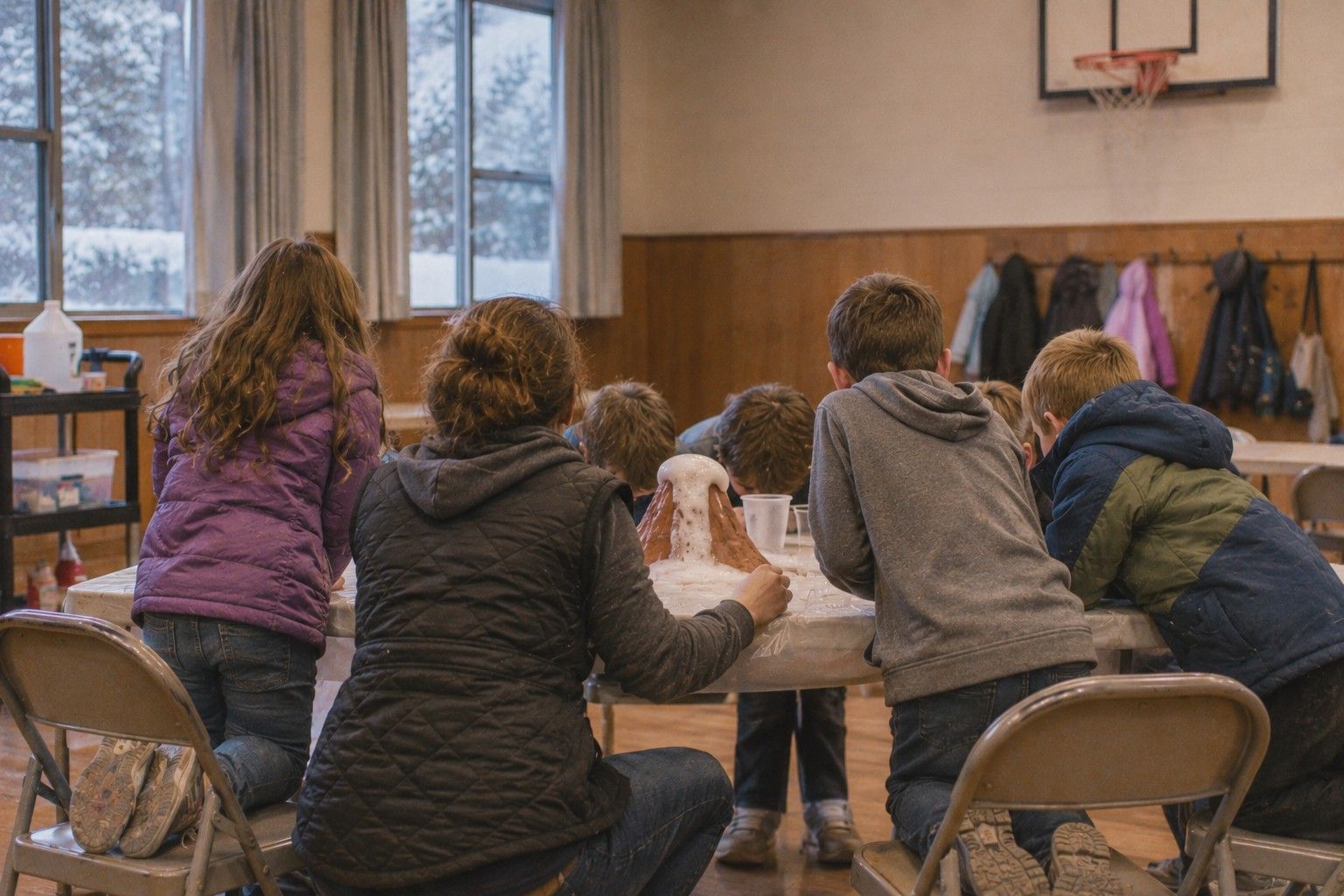
Here's what we found, sorted by kind and A to Z inside each group. Use the buttons to narrow it down. Co-ops fill up and change their days, so check each one's own page before you plan around it. We don't run any of these groups or check who leads them or how they're run. Faith labels go by what each group says on its own pages, or by who runs it, like a city or library. They're there to help you find a fit, not to judge anyone.
Ages
Who it's for
Faith
Homeschool co-ops3
Families meet once a week for classes parents teach. Most ask parents to help or teach, and most register by semester or session.
Blackfoot Synergy Homeschool Society
Blackfoot · Homeschool co-op
HomeschoolersFaith not stated6 to 910 to 12Teens- When
- Fall 2026 semester ran September 8 to November 24. Check the site for spring.
- Cost
- Not posted on its home page. Apply on its site.
A co-op of Blackfoot home educators where every parent teaches, helps in a class or watches the halls when not teaching, and serves on a committee. Its stated goal includes building a group of students 12 and up who support each other and the younger kids. Its site doesn't say whether it has a faith side, so ask.
Built around older kids looking out for younger ones.
From the co-op's own website, checked November 3, 2026. Fix or remove this
Compass Family Cooperative
Idaho Falls · Homeschool co-op
HomeschoolersNot faith-based3 to 56 to 910 to 12Teens- When
- Mondays, about 12:30 to 4:30 p.m., two 12-week semesters. Spring usually starts in late January. Membership opens in late December and late July.
- Cost
- $90 a family each semester plus a $20 cleaning deposit you get back. Class fees are extra and set by each teacher.
A weekly co-op where parents, teens and other community members teach the classes. It says it has no official teaching method or religious or secular view, and welcomes all homeschooling families with at least one child 6 to 18. Fall 2026 classes ran from a 3 to 4 music class to debate, acting, knitting and car maintenance for teens. A parent stays on site the whole time.
Its teens also meet outside co-op hours to hang out, learn and serve.
From the co-op's own website, checked November 3, 2026. Fix or remove this
Waymakers Homeschool Community Cooperative
Southeastern Idaho · Homeschool co-op
HomeschoolersAll faiths, some faith parts3 to 56 to 910 to 12Teens- When
- Wednesdays, three 8-week sessions a year (fall, winter January to March, spring). Registration opens in May, members first, then the waitlist.
- Cost
- Associate $30 a year (events, field trips, play dates, no Wednesday classes). Full $60 a year plus $5 to $35 per class, and each full member teaches a class once a year.
A family-led nonprofit co-op that says it's "focused on building friendships." Weekly parent-led classes, field trips, play dates, teen hangouts, moms' meetups and parties. It welcomes families of any faith. Meetings usually open with the Pledge and an optional prayer, and classes with religious content are labeled.
The $30 associate option is a low-cost way to try it.
From the co-op's own website, checked November 3, 2026. Fix or remove this
Homeschool days and classes at public places4
ARTitorium on Broadway, homeschool programs
Idaho Falls · Kids' art museum and studio (Idaho Falls Arts Council)
HomeschoolersNot faith-based3 to 56 to 910 to 12- When
- Friday classes (dates on its homeschool calendar). Homeschool Week is in September, announced on its social media.
- Cost
- Group field trips $60 for up to 20 students, then $3 a student. Class prices on its calendar.
Has a page just for homeschoolers: Friday art classes fitted to the kids in each class, field trips for homeschool groups, and a Homeschool Week each September when homeschool kids 5 and up and their families get in for $1.
A field trip with another family or two is an easy first outing together.
From the Idaho Falls Arts Council's own website, checked November 3, 2026. Fix or remove this
Home School Skate at the Idaho Falls ice arena
Idaho Falls · City ice rink
HomeschoolersNot faith-based3 to 56 to 910 to 12Teens- When
- Mondays 1:45 to 3:30 p.m. on the November 2026 calendar. The arena's season runs October to March, and times can change, so check its calendar.
- Cost
- $8, or $7 at the city rate, with rentals.
A public skate session set aside for homeschool families at the city's indoor ice arena. Skate rental is included.
Same day, same families every week, all winter. Bring hot cocoa for after.
From the City of Idaho Falls' price page and arena calendar, checked November 3, 2026. Fix or remove this
Mix It Up Thursdays at the Shelley library
Shelley · Library program (North Bingham County District Library)
HomeschoolersNot faith-based6 to 910 to 12- When
- Every Thursday at 2:30 p.m.
- Cost
- No cost posted.
Something different every week: art, music, movement, STEM and life skills. The library says it was "created with homeschoolers in mind," and all kids 6 to 12 are welcome.
A weekly time slot in the middle of the school day, so homeschool kids find each other.
From the library's own website, checked November 3, 2026. Fix or remove this
Options Day at the Idaho Falls Zoo and in Rigby
Idaho Falls and Rigby · Weekly classes run by Harmony Educational Services
HomeschoolersFaith not stated6 to 910 to 12- When
- Idaho Falls: Mondays 10 a.m. to 2:30 p.m. at the zoo's education center. Rigby: Tuesdays 10 a.m. to 2:30 p.m.
- Cost
- Not posted. Registration goes through Harmony, not the zoo.
Weekly elective-style classes for homeschool and online students in kindergarten through 8th grade, in small groups. Classes include animal and nature topics at the zoo like Critter Club, Wildlife Photography and Animal Enrichment Labs, plus art, sewing, ukulele, guitar and money skills.
A full day once a week with the same small classes is a lot of friend-making hours.
From the City of Idaho Falls' zoo page (no date on the page), checked November 3, 2026. Fix or remove this
Clubs, teams and programs open to all kids10
Not just for homeschoolers, which is the point: your kid meets kids from all over town, every week.
4-H in Bonneville County
Bonneville County · University of Idaho Extension club
Not faith-based6 to 910 to 12Teens- When
- Some clubs meet weekly, others once or twice a month. The library STEM club is the 2nd and 4th Tuesday at 4:30 p.m.
- Cost
- Fees not posted. Ask the county office.
Clubs for kids 5 to 18 (Cloverbuds for 5 to 7) built around a project, from animals to robotics to cooking. The county office places you in a club. The Idaho Falls library also hosts a 4-H STEM Club for ages 8 to 17.
Clubs run for years, so kids grow up together.
From University of Idaho Extension and the Idaho Falls Public Library, checked November 3, 2026. Fix or remove this
Girl Scouts of Silver Sage
Troops across East Idaho · Girl Scout council
Not faith-based6 to 910 to 12Teens- When
- Join any time. Troops set their own meeting days.
- Cost
- $65 a year for girls. Financial help may be available.
Troops for girls in kindergarten through 12th grade. You can join a troop, or join on your own as an individual member if there's no troop that fits.
From the council's own website, checked November 3, 2026. Fix or remove this
Idaho Falls Public Library clubs
Idaho Falls · Public library
Not faith-based6 to 910 to 12Teens- When
- Art Club 1st Friday 1:30 p.m. Teen D&D Wednesdays 4:30 p.m. (sign up first). Chess Wednesdays 7 p.m. and Saturdays 11 a.m.
- Cost
- No cost posted.
Clubs that meet again and again: Art Club for ages 6 to 12, teen Dungeons and Dragons (a new mini-campaign each month, so teens can join any time), teen writing, a weekly game night and chess club.
Teen D&D starts fresh each month, which makes it easy to be the new kid.
From the library's own calendar, checked November 3, 2026. Fix or remove this
Idaho Falls winter basketball leagues
Idaho Falls · City Parks and Recreation league
Not faith-based6 to 910 to 12Teens- When
- K to 6: sign up by December 16, season starts January 9, 2027. Junior high: sign up by December 12.
- Cost
- K to 6: $60 for city residents, $67 for others. Junior high: $64 or $71. Jersey $10 if needed.
Co-ed kindergarten plus girls' and boys' leagues for 1st to 6th grade, and a junior high league for 7th and 8th grade. Six Saturday games.
Sign up with a friend and ask to be on the same team.
From the City of Idaho Falls' league pages, checked November 3, 2026. Fix or remove this
Idaho Falls Youth Arts Centre
Idaho Falls · Nonprofit youth arts center
Not faith-based6 to 910 to 12Teens- When
- Teen Script Club: first Friday, 4 to 6 p.m. (register once). Shows and classes have their own seasons.
- Cost
- Teen Script Club is free. Other programs vary.
Musical theater, drama, choir, strings and dance for kids and teens, plus a free monthly Teen Script Club for ages 13 to 18.
A show means weeks of rehearsals with the same cast.
From the center's own website, checked November 3, 2026. Fix or remove this
Inclusive Ice and Sled Hockey
Idaho Falls · City ice arena program
Not faith-based6 to 910 to 12Teens- When
- During Adaptive/Inclusive Skate times on the ice arena calendar.
- Cost
- Regular admission. Gear at no extra charge.
For anyone with a physical disability or who is neurodivergent, skating with an aide or parent. Siblings are welcome. Sleds, pads, helmets, sticks and pucks are included with admission.
A small, steady group where everyone is figuring it out together.
From the City of Idaho Falls' program page, checked November 3, 2026. Fix or remove this
Madison Library kids' and tween clubs
Rexburg · Public library
Not faith-based6 to 910 to 12Teens- When
- STEAM: Tuesdays 4 p.m. Game club: Mondays 4 to 5:30 p.m.
- Cost
- No cost posted.
A weekly STEAM hour for ages 6 to 11 with grown-ups (Lego challenges, simple machines), and a Rubik's cube, chess and game club for ages 9 to 18, no experience needed.
From the library's own website, checked November 3, 2026. Fix or remove this
Pre-School Gym
Idaho Falls · City Parks and Recreation
Not faith-based3 to 5- When
- Tuesdays and Fridays, 9 to 11:30 a.m., October through April.
- Cost
- $2 a child.
Open gym play for kids 6 and under at the city's Recreation Center. Parents can watch or play along. Weekday mornings, so it's mostly little ones and their parents.
For you as much as them: the same parents come back every week.
From the City of Idaho Falls' page, checked November 3, 2026. Fix or remove this
Scouting America, Grand Teton Council
Packs and troops across East Idaho · Scouting council
All faiths, some faith parts6 to 910 to 12Teens- When
- Each pack or troop sets its own schedule.
- Cost
- Dues not posted on the pages we read. Financial aid is available for those who qualify.
Cub Scouts for boys and girls in kindergarten through 5th grade, Scouts BSA for ages 11 to 17, and Venturing for 14 to 20. Find a local pack or troop on the council's site. Scouting is open to all faiths, and its oath includes a promise of duty to God.
Campouts and group projects add up to a lot of time together.
From the council's own website and Scouting America's Be A Scout finder, checked November 3, 2026. Fix or remove this
Westside Builders Club
Idaho Falls (Westside branch) · Bonneville County Library District
Not faith-based3 to 56 to 910 to 12- When
- First Thursday of each month. Time not posted, so call the branch.
- Cost
- No cost posted.
A monthly family Lego program with building challenges. All ages are welcome.
From the library district's own website, checked November 3, 2026. Fix or remove this
Events for homeschool families1
East Idaho Home Educators conference
Pocatello · Yearly conference (nonprofit)
HomeschoolersFaith-basedTeens- When
- January 29 and 30, 2027, at the Idaho State University Student Union Building.
- Cost
- Early bird tickets on its site. Free adult tickets for grandparents and for parents whose oldest child is 5 or younger.
A two-day homeschool conference for adults and youth, run by home educators. It calls itself non-denominational and its mission speaks of a God-given right to educate.
A good place to meet other parents and find a co-op.
From the group's own website, checked November 3, 2026. Fix or remove this
Nothing matches all of those.
Facebook groups where homeschool families find each other
A lot of homeschool life around here runs through Facebook. Park days, field trips and "anyone want to meet up Thursday?" posts mostly live in these groups. These are the ones we found in Facebook's own group search, with the size it showed on November 3, 2026, rounded. Most are private, so you ask to join and may answer a few questions. We don't run or check any of them, and they're listed A to Z, not ranked. Run one and want it off the list? Fix or remove this
- Eastern Idaho Homeschooling FamiliesFamilies across the region.
- Idaho Falls Homeschool ClubFor families in and around Idaho Falls.
- Idaho Falls Homeschool SupportFor families in and around Idaho Falls.
- Idaho Homeschool EventsEvents around Idaho. Anyone can read it.
- Rexburg Area Homeschoolers (Idahome Educators 2.0)For families in and around Rexburg.
- Rigby HomeschoolersFor families in and around Rigby.
- Shelley Idaho HomeschoolersFor families in and around Shelley.
- Teens ConnectA social group for homeschooled teens 12 and up and their friends.
Get a real answer in a group. Say your town, your kids' ages, what they like and what day works. "Any homeschool park days in Ammon for a 7 and 9 year old, Tuesday or Thursday?" gets far more replies than "Any homeschool groups?" Search the group first, too. Lots of groups post a list of park days and co-ops at the top.
Want more? East Idaho Home Educators, a nonprofit that runs a yearly homeschool conference, keeps a list of homeschool groups by town across East Idaho, from St. Anthony to Pocatello. Groups can ask to be added, so it has a few we couldn't confirm on their own sites.
Can homeschoolers join public school sports and clubs in Idaho?
Yes, usually. Idaho Code 33-203 lets a homeschooled student sign up at a public school for one class, a few classes, or any program open to other students, like band, choir or a sport. They follow the same rules for behavior and performance as everyone else.
For sports and other activities outside class, there are two more steps. The student has to live in that school's attendance area. And they have to show grade-level work, with a state-recognized test or portfolio, or a score in the average range or higher on a nationally normed test. That proof counts for this school year and next.
A school team or show is one of the best friend-makers there is, since it means practice most days with the same kids.
- High school sports. The Idaho High School Activities Association's Rule 8-16 matches the law. The student is responsible for setting up the test and giving the results to the school's principal before they can play. The association's portfolio option asks for grade-level work in at least five of six subjects.
- Bonneville Joint School District 93 (Ammon, Iona, Ucon and east Idaho Falls). Its dual enrollment policy, reviewed in June 2026, says you register through the district like any student, with proof you live in the district. In the first two weeks of a grading period, full-time students get class seats before dual-enrolled students do. For activities, the lowest qualifying score is the fifth stanine (the middle of the scale) on a nationally normed test, parents pay for any outside testing, and fees are the same ones other students pay.
- Idaho Falls School District 91. We couldn't read its policy online, so call the school or the district office and ask about dual enrollment.
- Grades follow a student who switches. A public school student who becomes academically ineligible and switches to homeschooling stays ineligible that school year and the next.
- Older teens can take college classes, too. The law counts college dual credit as dual enrollment. The College of Eastern Idaho charges high school students $75 a credit. The state's Advanced Opportunities program can cover that, but homeschoolers get it only by dual enrolling in a public school that offers it, so ask the district.
And the basics, in case you're new: Idaho doesn't make you register, notify anyone or test your kids to homeschool. The State Department of Education says "there is no registration or sign up procedure required" to homeschool.
This is a plain-language summary of the law and policies as we read them on November 3, 2026, not legal advice. Rules and school policies change, so check the current law and ask the school before you count on a spot.
Are there homeschool groups that aren't religious?
Yes, though you may have to look a little harder. A lot of organized homeschool life in East Idaho runs through churches or groups with a faith side to them, and that's a great fit for many families. If it's not a fit for yours, you're not alone. Newcomers often post asking whether there are groups that aren't religious.
- Groups that say they're open to all. Compass says it isn't based on any religion or method, and Waymakers welcomes families of any faith. Their details are in the list above.
- Things open to everyone. City rec leagues, library clubs, 4-H, Scouts, Girl Scouts and museum classes are mixed groups by design. Your kid can make friends there whether or not the other kids homeschool.
- Faith-based on purpose. Some groups ask families to sign a statement of faith. Some are a great fit if you share it. Ask before you join so nobody's surprised.
Whatever your family believes, the best question to ask a group is the same: "What does a normal week look like, and who usually comes?"
How can homeschooled teens make friends their own age?
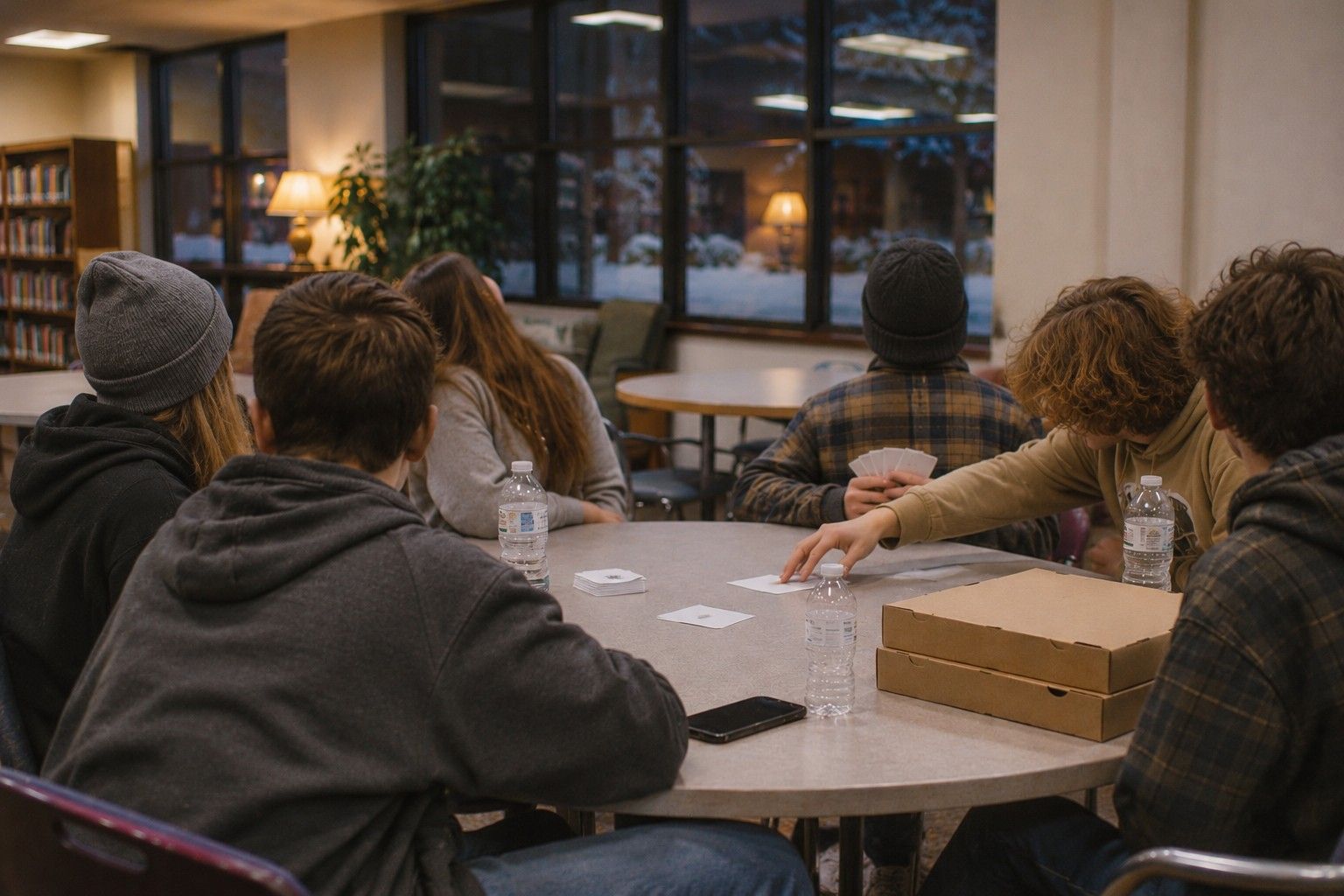
Teens are where homeschool friendships get hardest. Park days skew young, lots of families switch to school for high school, and a 15-year-old doesn't want to hang out with a pack of 7-year-olds. Teens want friends their age, and they want to choose them.
- Teen-only groups. The Teens Connect Facebook group is just for homeschooled teens 12 and up and their friends. Compass has a teen community, and Waymakers runs teen hangouts. See the list
- A team or a show. Sports, theater, choir and orchestra stack up hours with the same group fast. See Idaho's public school rule for school teams.
- Clubs with a job to do. 4-H, Scouts and Civil Air Patrol give teens a role and a reason to talk.
- Work and volunteering. A part-time job or a regular volunteer shift puts teens next to other teens every week.
- Classes. A class at a public school, a college class or a co-op class for teens is a natural place to meet.
Your role shifts with teens. You're more of a driver and a host now. One study of 497 Dutch teens found that when parents banned certain friends, teens had more contact with rule-breaking peers later, not less. Feed the friends and let your house be a place people want to be.
What helps a shy, anxious or neurodivergent kid?
If your kid is shy, anxious, autistic or has ADHD, the usual advice ("just join a co-op!") can feel like a lot. Some of these kids are homeschooled exactly because big groups were too much. That's OK. Friendship can look different and still be real.
- Start with the thing they love. In a small study of autistic teens, clubs built around their own big interest got them talking with other kids, and one ended up leading the club. A shared interest gives kids something to say.
- One friend at a time. One good friend matters a lot. Research by William Bukowski and colleagues found that for shy or left-out kids, having a friend helped keep sad feelings from growing over time.
- Home first. A short play date at your house, with one kid and a plan (bake cookies, build a fort, play one game), is easier than a crowded park.
- Small and structured. A class with the same six kids and a clear task often works better than free play.
- Practice and coach kindly. Role-play the first hello at home. Afterward, notice what went well. In a small randomized study of kids with ADHD, parents learned to guide play dates with encouragement and gentle feedback instead of criticism, and teachers later saw the kids better accepted by peers.
- Get help if they want friends but can't figure out how. The UCLA PEERS program teaches autistic teens friendship skills, with parents in sessions too, and teens in it hosted more get-togethers. Ask your pediatrician what social skills groups are near you.
This is general information, not medical advice. If you're worried about your child, talk with your pediatrician or a licensed child psychologist.
Why does my kid have activities but no close friends?
This one surprises a lot of parents. The calendar is full: co-op, soccer, piano, a field trip. And still your kid says they don't have friends. It's one of the most common worries in homeschool forums.
Usually it's step 4 on the friendship steps. Activities give kids contact with other kids. Friendship grows in the time around the activity: the walk to the car, the "can they come over?" Without that, teammates stay teammates.
- Ask your kid, "Who did you like talking to today?" Write down the name.
- Find that kid's parent and invite them to something small, like the park after practice.
- Do it again within two weeks. The second invite matters more than the first.
- Cut an activity if you need to. Fewer activities with the same kids beat many with different kids.
What if we live out of town, or our kid is the last one home?
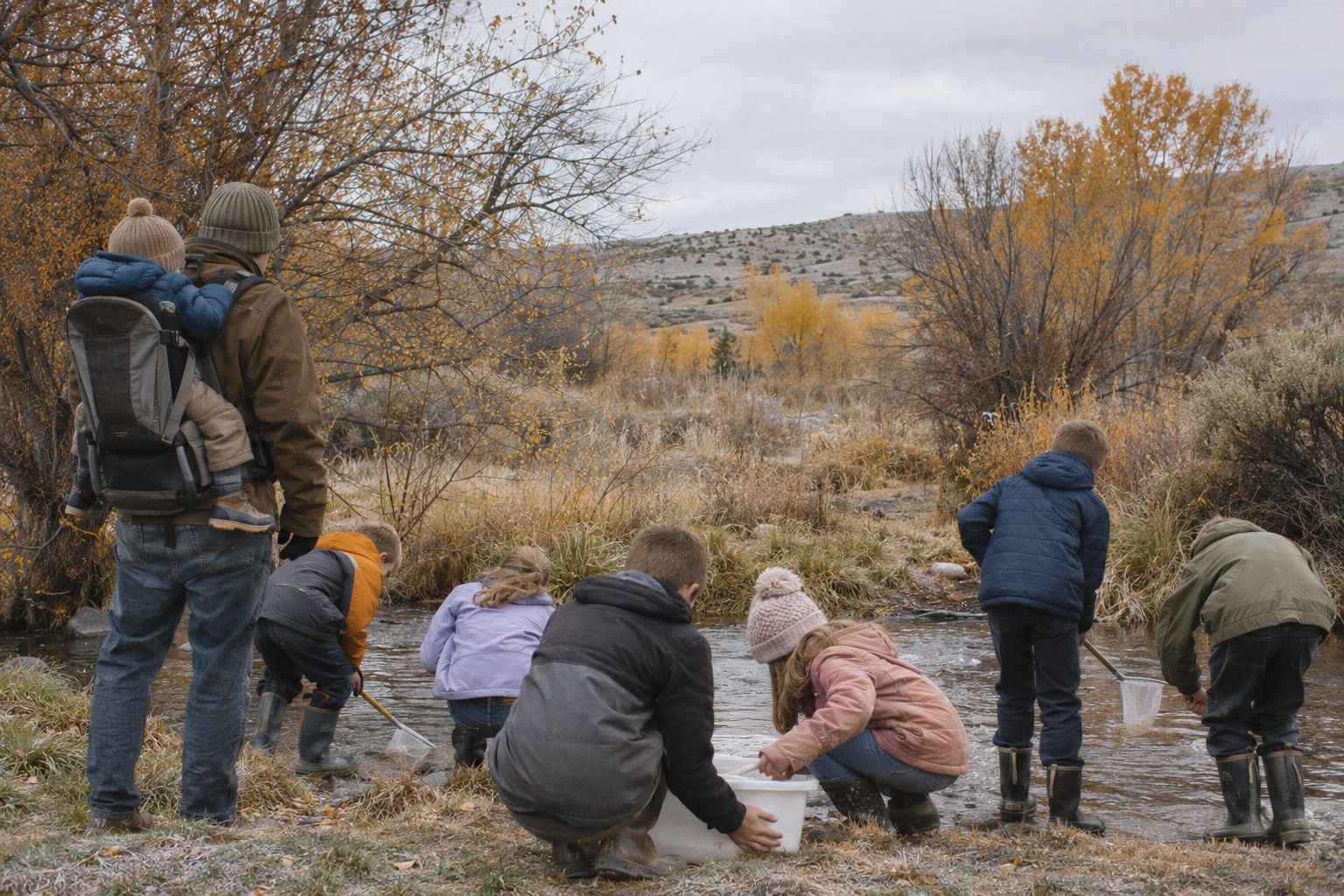
A lot of homeschool families here live in Shelley, Rigby, Ririe, Iona, Ucon or out on a farm road, and Idaho Falls is a drive. And when older siblings graduate or go to school, the youngest can end up feeling like an only child.
- Make a "town day." Pick one day a week and stack two things on it, like a co-op morning and a library club in the afternoon. One long drive beats three short ones.
- Use what's close. Your town's library, 4-H club, church and Facebook group. Rigby, Shelley and Rexburg all have their own homeschool groups.
- Host. A farm or a big yard is a great place for a play date. Invite a family out for an afternoon and a meal.
- Find one family near you. Ask in your town's group: "Any homeschoolers near Ririe with a 10-year-old?" One nearby family can change a whole year.
- For the last one home, plan friend time on purpose, the way you did when they were little. Lean on cousins and older siblings, and give them a weekly thing that's just theirs.
- In between visits, video calls, letters and online games keep friendships going until the next time.
What if friends went back to school, or we just moved here?
Both happen a lot. Lots of families move to Idaho Falls for work and arrive knowing nobody. And homeschool families switch to school all the time, which can take your kid's best friend and your own support in the same week. It's OK to be sad about that. It's a real loss.
- Keep the old friendship going. School kids still want friends after 3 p.m. and on Saturdays. Offer to pick them up.
- Start one new weekly thing fast. Don't wait for the perfect fit. Pick something you can start within a month and give it a full season.
- New here? Join a local homeschool Facebook group before or right after you move, and go to things that repeat, where you'll see the same faces.
- Check start dates. Waymakers runs three sessions a year, and Compass opens membership in late December for spring.
What if the group feels cliquey?
Long-running groups can be hard to break into, especially for a kid who joins at 11 when everyone has known each other since 5. It's rarely personal. Give it a full session. Have your kid join one class or club inside the group where everyone is new. Volunteer for a job, since helping is the fastest way to know people. Invite one family over. And if it still feels closed after a season, it's fine to try a different group.
How do I start our own homeschool park day?
If nothing fits, start something. Plenty of homeschool groups start with one parent and one park.
- Pick one park, one day, one time. Keep it the same every week, or every other week. Same time is what lets friendships build.
- Say who it's for. "Ages 6 to 12, all families welcome" or "Teens 13 and up." Clear ages help the right families come.
- Post it. Put it in a local homeschool Facebook group, your town's group and the library's bulletin board, if they allow it. Post a reminder the day before.
- Bring a reason to play. A ball, chalk, a kite, a bucket for the creek. Kids who don't know each other join in faster with something to do.
- Show up even when it's small. One family is a start. Most groups take a few months to grow.
Winter is a problem in Idaho Falls, so have a backup: the library, a church gym that lets groups use it, or the city's indoor places. For a big group or a pavilion, check with the city's parks department about reservations.
Homeschool park day
Print this, fill in the blanks by hand, and post it where homeschool families will see it. A first name is enough. Skip your address and phone number.
- Where
- When
- Ages
- Bring
- Questions? Ask for
What happens
- Kids play, parents talk
- Same place, same time, every time
- Rain or snow plan posted the day before
Everyone is welcome
- New homeschoolers
- Little brothers and sisters
- Shy kids and their grown-ups
From the homeschool friends guide at EastIdahoPros.com. Parents stay with their kids.
What can my kid say to make a friend?
The hardest part is often the first sentence, for kids and parents alike. Practice a few at home. They just need to be friendly.
For your kid, at the activity
- "Hi, I'm Sam. Can I build with you?"
- "What are you making? Cool. Want to see mine?"
- "Do you come every week? Me too."
For you, to another parent
- "Our kids seem to get along. Would yours like to meet at the park Thursday?"
- "We're new to homeschooling. What does your week look like?"
- "Want to swap numbers so the kids can get together?"
For your teen, by text
- "A few of us are going bowling Friday. Want to come? My mom or dad can drive."
- "Are you doing the spring class too? We should sign up for the same one."
What if I'm lonely too?
Here's the part nobody asks about at Thanksgiving. You're the teacher all day and still the parent at night. You might go days without a real conversation with another adult. If you're lonely, that doesn't mean you're doing it wrong.
The US Surgeon General's 2024 advisory on parents cited a 2021 survey where about 65% of parents and guardians had felt lonely, and 77% of single parents, compared with 55% of other adults. It advises parents to "Nurture connections with other parents and caregivers." Sociologist Jennifer Lois spent years with a homeschool support group and found many mothers went through a stretch of overload and burnout. The ones who came through it tended to lower the bar on housework and loosen the school plan, and almost all had husbands who pitched in with housework, child care and teaching. If you're doing this alone, that's one more reason to lean on other parents. One mom told her, "I have to constantly remind myself that I have the rest of my life to have the house be perfect."
And your friendships help your kids too. In one study of fourth graders, kids whose parents had close, warm friendships tended to have better friendships themselves (the link looked different for girls and boys). When you find your people, your kids often find theirs.
- Pick groups with a parent side. Waymakers holds moms' meetups each session. Co-ops put parents in the same room every week, and park days are as much for you as the kids.
- Find one parent to text. Not a best friend, just someone to send "rough day" to. Being friendly and showing up is enough to start.
- Try the January conference. East Idaho Home Educators' conference in Pocatello is faith-based, and parents whose oldest child is 5 or younger get free adult tickets.
- Lower one bar. Maybe it's the house or the curriculum. Pick one and let it be "good enough" this month.
- Make time that's just yours. The advisory puts it this way: "caring for yourself is a key part of how you care for your family."
If it's more than lonely. If you feel down, hopeless or worn out most days for a couple of weeks, tell your doctor. Lots of parents go through this, and it's worth getting help for. If things ever feel too heavy, you can call or text 988, the Suicide and Crisis Lifeline, any time to talk with someone. It's free, and it's for any kind of emotional distress. To find local services in Idaho, dial 211.
This is general information, not medical or mental health advice. If you're in danger right now, call 911.
When is it time to think about a different plan?
Sometimes you try everything and your kid is still lonely, or they tell you they want to go to school. Homeschooling is a choice you get to keep making, one year at a time.
- Try a focused plan first. Use the friend plan below for a few months, then check in.
- Ask your kid. What do they miss? Who do they want to see? Older kids usually know.
- Look at the middle paths. Idaho lets homeschoolers join public school activities and take some classes (see the rule). Some families homeschool through 8th grade and switch for high school.
- Know when to call the doctor. KidsHealth, from Nemours, says to talk to your child's doctor if loneliness lasts too long or happens too often. It says a therapist can also help a child find ways to cope.
Some kids thrive in school. Some thrive at home. Lots of kids would be fine either way with a couple of good friends. You know your kid.
What's a simple plan we can start this week?
This one-page plan is for you and your kid to fill in. Print it, write on it, and stick it on the fridge. Check back in a couple of months.
Our friend plan
Fill this in together. Keep it simple: one group, one friend, one thing they love.
- Our weekly group (same kids, every week)
- Day and time
- A kid we like from it
- Something we'll invite them to
- Date of the invite
- Something my kid loves (a club or class idea)
- A parent I'll text
- Check-in date
Each week
- Go to the same group
- Learn one new name
- Ask, "Who did you like talking to?"
Each month
- Invite one friend to something outside the group
- Then invite them again
- Try one new thing if the old one isn't working
From the homeschool friends guide at EastIdahoPros.com. Friendships take a few months. Be patient with them and with yourself.
Common questions
How do homeschooled kids make friends?
The same way all kids do: by spending lots of time with the same few kids, doing something they both like. For homeschoolers that usually means one weekly group (a co-op, a class, a team, 4-H or a club) plus a parent who invites one kid from it to do something else, more than once. Research on adults suggests a casual friendship takes about 50 hours together and a close one more than 200.
Are homeschooled kids less social than kids in school?
On average, no. Reviews of the research by Richard Medlin (2013) and by Robert Kunzman and Milton Gaither (2020) found homeschooled kids hold their own on social skills. Kunzman and Gaither add that some homeschoolers feel more isolated, and that homeschoolers with more peer time do better. Most of these studies use small volunteer groups, so read them as "on average," not as a promise.
How often should my homeschooler see other kids?
There's no set number. Aim for at least one group your kid sees every week, with the same kids. Watch your kid more than the calendar: a kid who is happy, has someone to talk about and looks forward to the week is doing fine.
Where can I find homeschool groups in Idaho Falls?
Try the local Facebook groups (there are groups for Idaho Falls, East Idaho, Rexburg, Rigby and Shelley), East Idaho Home Educators' list of groups by town, three East Idaho co-ops with their own websites (Blackfoot Synergy, Compass and Waymakers), and city and library programs like Home School Skate at the ice arena and Options Day at the zoo. This guide lists what we found, with days, ages and costs, checked November 2026.
Is there a homeschool co-op in Idaho Falls that isn't religious?
Compass Family Cooperative says it isn't based on any religion or homeschool method and welcomes all homeschooling families. Waymakers says it welcomes families of any faith, with an optional prayer at the start and religious classes labeled. City rec, 4-H and library programs are open to everyone too. Ask any group up front if it has a statement of faith.
Can homeschoolers play sports at public schools in Idaho?
Usually, yes. Idaho Code 33-203 lets homeschoolers enroll part time at a public school for classes or for programs like sports, band and choir, under the same rules as other students. For sports and other activities they must live in that school's attendance area and show grade-level work with a test score in the average range or higher, a state-recognized test or a portfolio. Call the school's activities office to start.
How can my homeschooled teen make friends?
Teens want friends their own age, so look for teen-only groups (the Teens Connect group, a co-op's teen program), teams, theater, 4-H, Scouts, jobs, volunteering and classes. Let your teen choose, and offer rides. Research on Dutch teens linked banning friends to more contact with rule-breaking peers, not less.
My kid is shy or autistic. Where do we start?
Start small and start with what they love. One friend at a time, at your house, for an hour, with a plan. Small, structured classes built on one interest often work better than big park days. For autistic teens, the UCLA PEERS program has research behind it. Your pediatrician can point you to social skills groups near you. This is general information, not medical advice.
I'm a homeschool parent and I'm lonely. Is that normal?
Very. A 2024 US Surgeon General advisory cited a 2021 survey where about 65% of parents and guardians had felt lonely, compared with 55% of other adults. Homeschool parents carry the teaching on top of that. A parents' night, a co-op where adults talk, or one other parent you text can make a big difference. If you feel down most days, tell your doctor. You can call or text 988 any time to talk with someone.
Should I put my kid in school because they're lonely?
It depends on your kid. Try a focused plan for a few months first, and ask your kid what they want. Middle paths exist too, like Idaho's rule that lets homeschoolers join public school activities and take some classes, or switching for high school. Some kids really do want school, and that's OK.
Do online friends count?
They can, especially for teens with a niche interest or social anxiety. A 2015 Pew survey found 57% of US teens had made a new friend online. Research on young adults suggests online friendships can be close and real. In-person time still matters, so try to pair an online friend group with at least one thing face to face. What's safe for your kid is your call.
Where this comes from
We checked the facts on this page on November 3, 2026. Groups and programs come from their own websites or Facebook pages and from city, library, school district and state pages. We used other lists, including East Idaho Home Educators' group list, only to learn what exists, then went to each group's own page. We searched a big Idaho Falls Facebook group and read national homeschool forums to learn what parents ask about. We didn't take facts about groups from posts, quote anyone, or keep anyone's name. Facebook group names, sizes and privacy settings come from Facebook's own group search. Research comes from the papers and reports below, opened on the same day, and we say who each study looked at.
Research
- Richard G. Medlin, "Homeschooling and the question of socialization revisited", Peabody Journal of Education, 2013, and the 2000 review
- Robert Kunzman and Milton Gaither, "Homeschooling: An updated comprehensive survey of the research", Other Education, 2020 (copy of the article)
- Jeffrey A. Hall, "How many hours does it take to make a friend?", Journal of Social and Personal Relationships (online 2018, 2019 issue), as reported by the University of Kansas and Futurity. 355 adults who had moved and 112 college freshmen
- Sigal Faur and Brett Laursen, "Classroom seat proximity predicts friendship formation", Frontiers in Psychology, 2022. 235 kids in grades 3 to 5
- Gary W. Ladd and Craig H. Hart, "Creating informal play opportunities", Developmental Psychology, 1992. 83 preschoolers
- Loes Keijsers and colleagues, "Forbidden friends as forbidden fruit", Child Development, 2012. 497 Dutch teens
- William Bukowski, Brett Laursen and Betsy Hoza, "The snowball effect," Development and Psychopathology, 2010, as reported by ScienceDaily. 231 kids in grades 3 to 5
- Sandra Simpkins and Ross Parke, "The relations between parental friendships and children's friendships", Child Development, 2001. 125 fourth graders
- Elizabeth Laugeson and colleagues, UCLA PEERS, Journal of Autism and Developmental Disorders, 2009 and 2012. Small groups of autistic teens
- Lynn Koegel and colleagues, interest-based clubs for autistic teens, Journal of Positive Behavior Interventions, 2012, as reported by UC Santa Barbara. Three teens
- Amori Yee Mikami and colleagues, "Parental friendship coaching for children with ADHD", Journal of Abnormal Child Psychology, 2010. 62 kids with ADHD
- Peter Gray, "The special value of children's age-mixed play", American Journal of Play, 2011
- Jennifer Lois, "Role strain, emotion management, and burnout: homeschooling mothers' adjustment to the teacher role", Symbolic Interaction, 2006
- Siegler and colleagues, chapter on peer relationships, How Children Develop (Macmillan)
- Pew Research Center, "Teens, technology and friendships", 2015
Reports and numbers
- US Surgeon General, "Our epidemic of loneliness and isolation", 2023
- US Surgeon General, "Parents under pressure", 2024
- KidsHealth (Nemours), "Helping a lonely child", reviewed October 2023
- National Center for Education Statistics, homeschooling in 2022-23 (September 2024), and Pew Research Center, "A look at homeschooling in the US" (February 2025)
- Johns Hopkins Homeschool Hub, Idaho
- 988 Suicide and Crisis Lifeline and Idaho 211 CareLine
Idaho law and schools
- Idaho Code 33-203, Dual enrollment and 33-202, School attendance
- Idaho State Department of Education, Home School
- Idaho High School Activities Association, Rule 8 (eligibility) and dual enrollment portfolio form
- Bonneville Joint School District 93, Policy 3030, Dual Enrollment (reviewed June 10, 2026)
- College of Eastern Idaho, information for parents and the State Department of Education's Advanced Opportunities guide for nonpublic students (2025-26)
- Homeschool Idaho, Idaho homeschool law
Groups and programs
- Blackfoot Synergy Homeschool Society (the co-op's own website)
- Compass Family Cooperative (the co-op's own website)
- Waymakers Homeschool Community Cooperative (the co-op's own website)
- ARTitorium on Broadway, homeschool programs (the Idaho Falls Arts Council's own website)
- Home School Skate at the Idaho Falls ice arena (the City of Idaho Falls' price page and arena calendar)
- Mix It Up Thursdays at the Shelley library (the library's own website)
- Options Day at the Idaho Falls Zoo and in Rigby (the City of Idaho Falls' zoo page (no date on the page))
- 4-H in Bonneville County (University of Idaho Extension and the Idaho Falls Public Library)
- Girl Scouts of Silver Sage (the council's own website)
- Idaho Falls Public Library clubs (the library's own calendar)
- Idaho Falls winter basketball leagues (the City of Idaho Falls' league pages)
- Idaho Falls Youth Arts Centre (the center's own website)
- Inclusive Ice and Sled Hockey (the City of Idaho Falls' program page)
- Madison Library kids' and tween clubs (the library's own website)
- Pre-School Gym (the City of Idaho Falls' page)
- Scouting America, Grand Teton Council (the council's own website and Scouting America's Be A Scout finder)
- Westside Builders Club (the library district's own website)
- East Idaho Home Educators conference (the group's own website)
- East Idaho Home Educators and its Community Connection page
- Facebook groups: Facebook's own group search and group About pages, read on November 3, 2026 (sizes rounded)
Groups change their days, prices and rules every semester, so check before you sign up. Nothing here is a promise that a group has room or is a good fit, and you know your kids best. Spot something out of date, or run a group we should look at? Email hello@eastidahopros.com.
Still have a question?
Ask your neighbors in Ask East Idaho, our free Facebook group for Idaho Falls, Ammon, Rexburg, Pocatello and nearby towns. Good questions there help us decide which guide to write next.
You need a Facebook account to join. It's a private group, so only members see posts. When you ask to join, we ask you to agree to the group's rules and answer two quick questions: which part of East Idaho you're in or curious about, and what you're hoping to find. We never ask for your email or phone number.