On this page
- Tonight's pipe plan
- How cold it gets here
- Where pipes freeze
- How to keep pipes from freezing
- Dripping faucets
- Spigots, hydrants and sprinklers
- My water stopped. What now?
- How to thaw a pipe safely
- If a pipe bursts
- Your pipe or the city's?
- If you rent
- What it costs
- Local plumbers
- Printable cold snap card
- Common questions
- Where this comes from
In Idaho Falls, the line from the city's curb stop (the shutoff near your property line) into your house is yours to fix. The Idaho Falls Water Division is at (208) 612-8471.
Every cold snap, somebody in the Idaho Falls Facebook groups posts "drip your faucets tonight," and somebody else asks whether that means every faucet or just one. Newcomers ask whether pipes really freeze here. (They do.) Here are the answers, from the city's own advice and code, checked November 2, 2026.
What should I do about my pipes tonight?
Set the slider to tonight's low from your weather app and tick what your house has. You'll get a short list for tonight, built from the advice later on this page.
Hard freeze. Pipes in cold spots are at risk.
- Keep the heat at 55°F or higher, day and night.
- Let a thin trickle run from faucets on outside walls.
- Open the cabinet doors under sinks on outside walls.
- Keep the garage door shut if water lines run through the garage.
Built from the City of Idaho Falls, the American Red Cross, the Insurance Institute for Business & Home Safety (IBHS), University of Illinois Extension, Colorado State University Extension, the U.S. Consumer Product Safety Commission and manufacturer instructions, all linked at the bottom of the page. A general plan, not a promise your pipes won't freeze. Runs in your browser and saves nothing.
How cold does it get in Idaho Falls?
Plenty cold enough. Pipes can freeze and burst once it's 20°F or colder outside, says a Texas A&M extension sheet built on Red Cross and IBHS advice. By NOAA's numbers, Idaho Falls gets about 80 of those nights between November and March, and in December and January nearly three of every four nights reach 20°F. The coldest snaps go well below zero. On January 30, 2023, Idaho Falls hit -32°F, the Post Register reported, citing the National Weather Service.
Ground freezes too. The city says its water lines are buried 5 to 6 feet deep, below the normal frost line, but in long stretches of extreme cold "frost has been known to penetrate more than 7 feet deep." That's when the line from the street to your house can freeze, even if every pipe inside is warm.
Where do pipes freeze in a house?
Pipes freeze where cold air reaches them. The City of Idaho Falls says frozen lines usually happen where the water line comes into the basement or crawl space. The Red Cross adds pipes on outside walls with little insulation, and pipes in attics, garages and kitchen cabinets.
Outdoor spigots
Hoses left on in winter trap water that freezes. Take them off and drain them.
Sinks on outside walls
Kitchen and bathroom pipes against an outside wall sit in a cold cabinet. Open the doors on cold nights.
Crawl spaces and basements
Where the water line comes into the house. The city says this is where most frozen lines happen.
Garages
Pipes running through a garage freeze when the big door is open or the garage isn't heated.
The line from the street
Buried 5 to 6 feet deep in Idaho Falls, but frost can reach more than 7 feet in a long cold spell.
Attics
Any pipe in an unheated attic needs insulation, or a better route.
Here's the strange part. A pipe usually doesn't split where the ice is. The International Code Council, citing research from IBHS, explains that the ice plug pushes water toward a closed faucet, pressure builds in that stretch, and "the pipe often bursts where little or no ice has formed." A dripping faucet gives that pressure somewhere to go.
How do I keep my pipes from freezing?
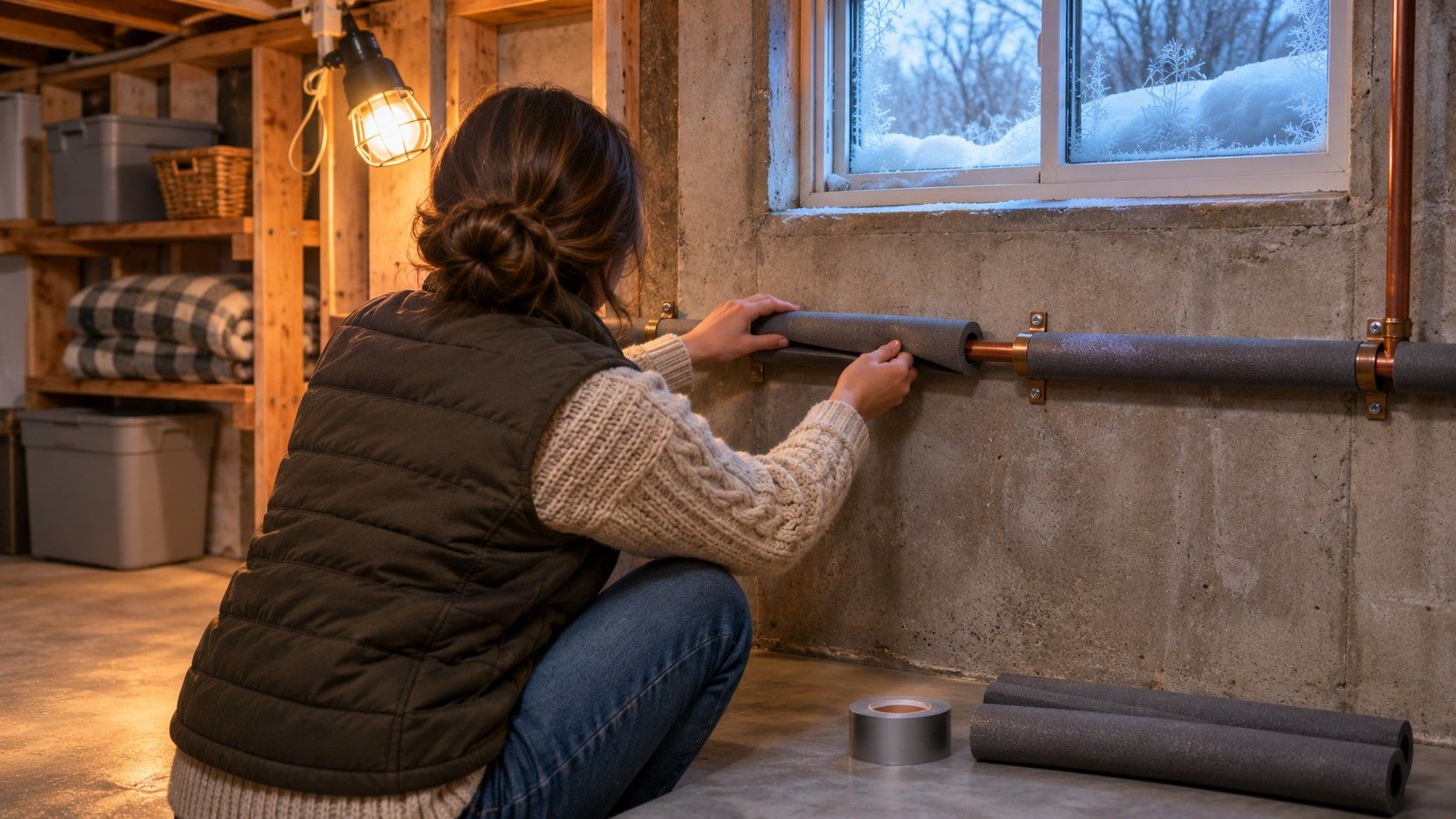
- Keep the heat at 55°F or higher. Day and night, even when nobody's home. The Red Cross says to keep the same setting all night during a cold snap. Your heating bill goes up a little. A burst pipe costs far more.
- Wrap exposed pipes. Foam pipe sleeves for pipes in crawl spaces, garages, attics and unheated basements. Foam slows heat loss but doesn't make heat, so the International Code Council notes insulation alone "cannot protect a pipe from freezing" in a space with no heat at all.
- Use heat cable where there's no heat. Buy a UL-listed pipe heat cable with a built-in thermostat, plug it into a GFCI outlet and follow the instructions exactly. Don't wrap it over itself. The Consumer Product Safety Commission warns that too much insulation over heat tape can start a fire. Check it every fall, and replace it if the jacket is cracked or charred.
- Close up the cold air. IBHS says to seal cracks and gaps on the outside of the house and cover crawl space vents for the winter. Keep the garage door shut if water lines run through it.
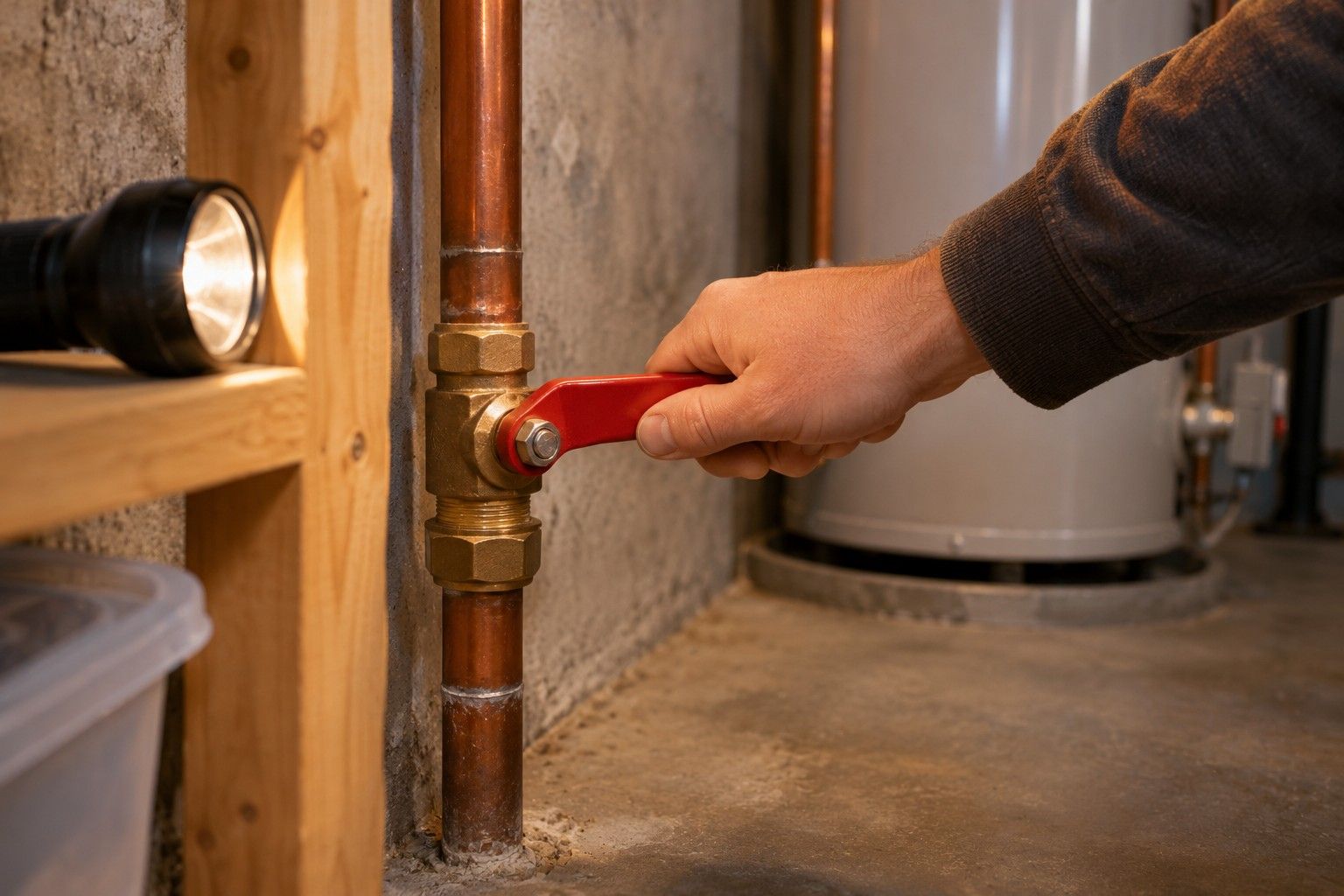
- Find your main shutoff now. The city says it's usually where the water line comes into the house, often in a mechanical room, basement or crawl space, and it can hide behind a wall in a finished basement. Make sure it turns.
- Furnace quit? Open the cabinet doors under sinks on outside walls and let those faucets trickle until the heat is back. Our guide to what to check when your furnace stops working has the steps.
- Going away? Leave the heat at 55°F or higher and have someone check the house every day. If you'll be gone more than a week in freezing weather, IBHS suggests closing the main slowly and letting a couple of faucets on the lowest floor drain. State Farm notes that shutting off the water also shuts off fire sprinklers, if you have them.
Should I drip my faucets? How much, and which ones?
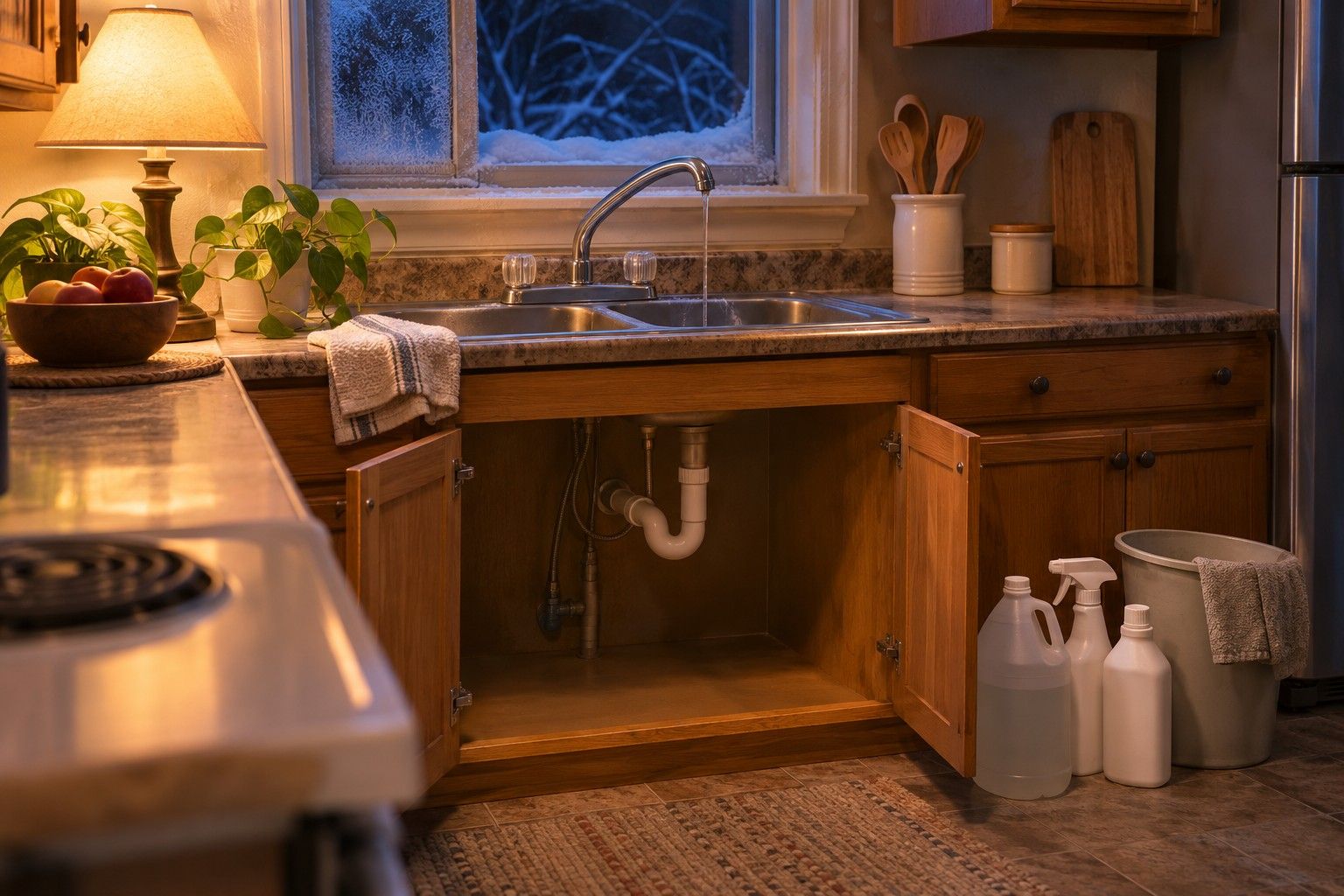
Yes, on the coldest nights. Which faucets depends on who you ask. The Red Cross says to let the cold water drip "from the faucet served by exposed pipes," meaning the sinks on outside walls or above a crawl space. IBHS goes further and says to drip all faucets in extreme cold. No source gives an exact rate. A thin, steady trickle is enough, because the goal is to keep a little water moving and give pressure a way out.
Hot or cold? The Red Cross says cold, and the City of Idaho Falls says to leave cold water trickling after a line has frozen. University of Illinois Extension says hot and cold. If both lines of a sink run along an outside wall, a small trickle from each side covers both. And if a line has frozen before, the city says to keep a trickle of cold water running so it doesn't freeze again.
A trickle uses some water. Ammon's posted rate is $1.10 per 1,000 gallons on top of the monthly base, so a few nights of a thin trickle adds little to the bill.
How do I winterize outdoor faucets, yard hydrants and sprinklers?
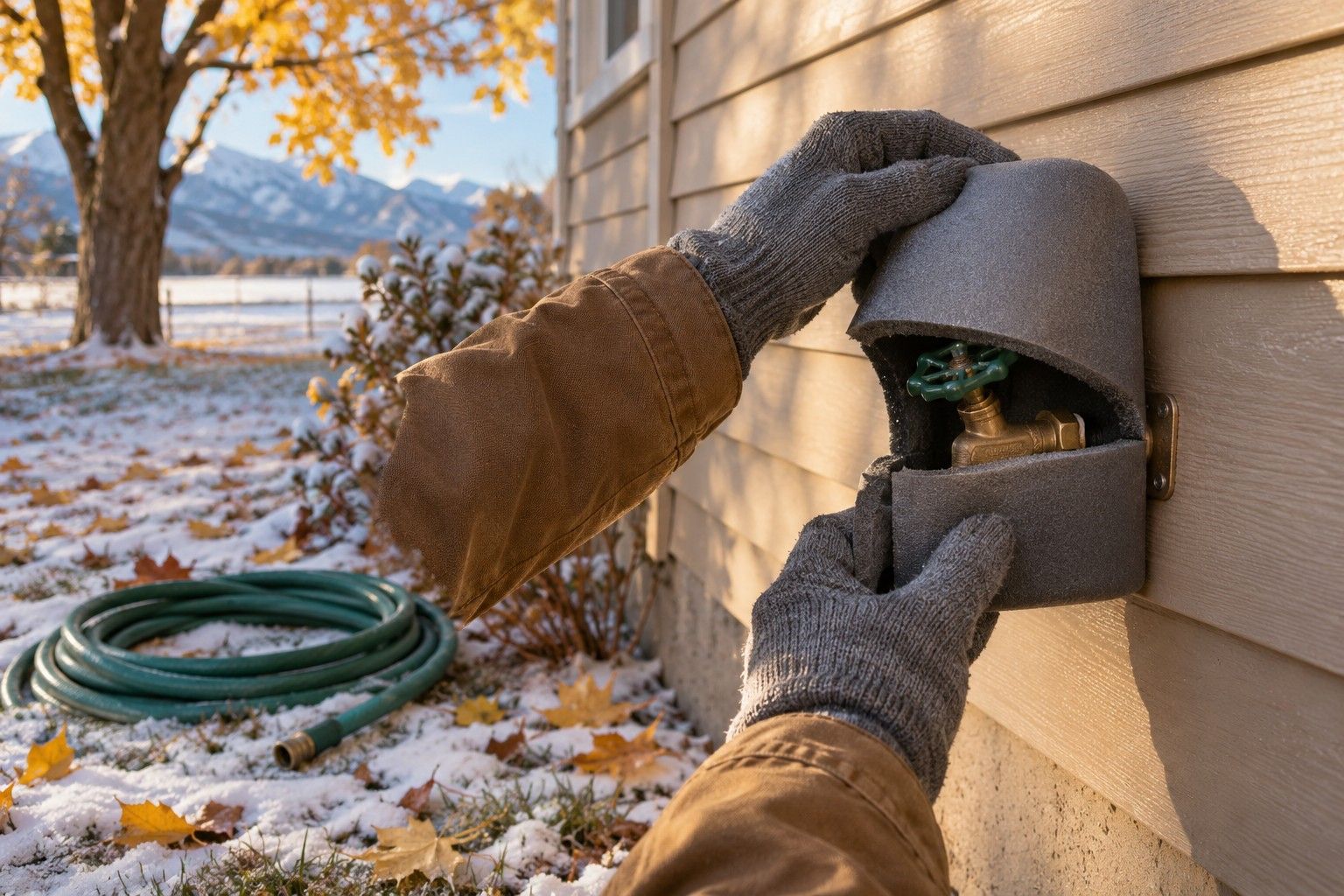
- Outdoor spigots. The Red Cross says to remove, drain and store hoses, then close the inside valve that feeds each outdoor faucet and open the outdoor faucet so it drains. A foam cover adds a little protection.
- Frost-free spigots and yard hydrants. Common on rural lots and acreage. They close the valve inside the warm wall (spigots) or below the frost line (yard hydrants), and the water left in the faucet drains out, but only with the hose off, a manufacturer's instructions say. A hose left on in winter can freeze and split the valve inside the wall. IBHS notes that many homes built before 2010 don't have frost-proof outdoor faucets.
- Sprinkler systems. Colorado State University Extension says compressed air is the only sure way to clear a sprinkler system, and that the air pressure should stay at or below 80 psi for rigid PVC and 50 psi for poly pipe. Wear eye protection. Many people hire this out in the fall. The Red Cross says not to put antifreeze in sprinkler lines unless the maker or installer says to, and Colorado State says backflow devices must never be blown out with compressed air.
My water stopped. Are my pipes frozen?
Start here. Answer a few questions and you'll get the next steps. The same steps are written out below in case this doesn't load.
This tool needs JavaScript. The same steps are written out in the section below.
What's happening with the water?
Do your neighbors have water?
Ask next door, or check the city's alerts. If the whole street is out, it's likely the city's side.
Are the valves under that sink, and by the water heater and softener, all the way open?
The City of Idaho Falls says to check these first.
Are the valves inside the house all the way open, including the ones by the water heater and softener?
Can you find and safely reach the frozen pipe?
Look where pipes run along outside walls and where the water line comes into the basement or crawl space. Frost on a pipe, or a pipe that feels much colder than the rest, is a clue.
You can try thawing it yourself
- Open the faucet that pipe feeds, so melting water has somewhere to go.
- Warm the pipe slowly with a hair dryer, an electric heating pad or towels soaked in warm water. Start near the faucet and work toward the frozen spot.
- Never use a torch, a propane or kerosene heater, a charcoal stove or any open flame.
- Keep electric tools away from standing water and plug them into a GFCI outlet.
- Once water flows, let it run until full pressure comes back. Then check every other faucet.
- Watch the pipe as it thaws. A crack may not leak until the ice melts. If water sprays, shut off the main.
- On cold nights after this, leave a trickle of cold water running at that faucet.
Call a licensed plumber
- Plumbers whose own sites mention frozen or burst pipes are listed further down this page. We don't check licenses, so ask when you call.
- Leave the faucet open, and open the cabinet doors near that pipe.
- Turn the heat up a few degrees while you wait.
- Don't cut into a wall or ceiling to hunt for it.
- Know where your main shutoff is in case the pipe splits as it thaws.
- In Idaho Falls, the line from the curb stop into your house is yours to fix. If you aren't sure which side the problem is on, the Water Division at (208) 612-8471 can rule out the city's side.
Shut off the water first
- Turn off the main water shutoff, usually where the water line comes into the house.
- Open a faucet or two to drain the pressure out of the lines.
- If water is near outlets, cords or the electrical panel, stay out of the water and call your electric company, or 911 if anyone could get hurt.
- Call a licensed plumber.
- Take photos of the damage and call your insurance company.
- Move belongings out of the wet area, and dry it out quickly to limit mold.
Call the city
- Idaho Falls: the Water Division is at (208) 612-8471. The city's staff directory lists 208-612-8439 as its after-hours number. We haven't called it to confirm.
- Ammon: Water and Public Works is at (208) 612-4034 on weekdays, and City Hall is (208) 612-4000.
- After hours, Ammon's contact page lists non-emergency dispatch at (208) 529-1200, or 911 for an emergency.
- If you rent, the city says to check with your landlord in case work nearby has shut off the water.
- Keep a faucet slightly open so you'll hear when water comes back.
Good. That was the easy fix
- Let the water run a minute to clear any air.
- On cold nights, keep a trickle going at faucets on outside walls.
- If the water slows again, look for a frozen pipe near outside walls or the crawl space.
Based on the City of Idaho Falls, the American Red Cross, IBHS, Texas A&M AgriLife Extension, State Farm (an insurer) and a Lowe's how-to, plus a few cautious tips of our own. General information, not a diagnosis. A licensed plumber can tell you what's going on in your own house. Runs in your browser and saves nothing.
How do I thaw a frozen pipe safely?
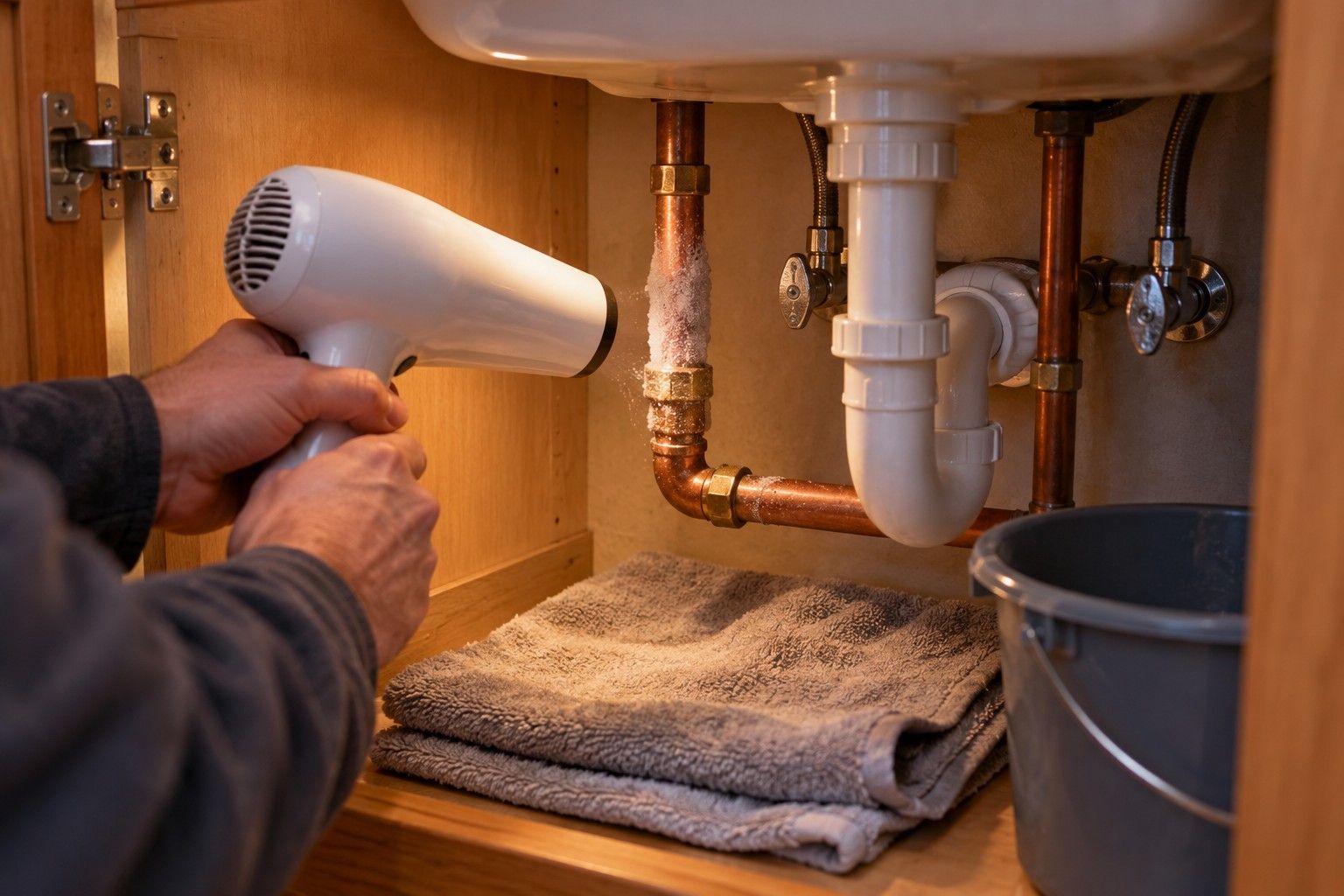
- Find it. If water only trickles from a faucet, suspect a frozen pipe. Look along outside walls and where the water line comes into the basement or crawl space.
- Open the faucet. As the ice melts, moving water helps melt the rest.
- Warm it slowly. Use a hair dryer, an electric heating pad wrapped around the pipe, or towels soaked in warm water. The city says to warm it "until a little flow of cold water is restored at a faucet." Start at the faucet end and work toward the freeze.
- Keep the flow going. Once water moves, let the cold water run until full pressure comes back, then check the other faucets in the house.
- Call a licensed plumber if you can't find it, can't reach it or can't get it to thaw.
No torch, no flame. The City of Idaho Falls says a torch heats the pipe too fast and can crack the ice inside and split the pipe. The Red Cross says never use a blowtorch, a kerosene or propane heater, a charcoal stove or any open flame. Texas A&M AgriLife Extension adds that these are a serious fire hazard and can give off deadly carbon monoxide. In January 2013, someone near Idaho Falls used a weed burner to thaw a pipe in a crawl space and the house caught fire, local news reported.
Space heaters: keep them 3 feet from anything that can burn, plug them straight into a wall outlet (never an extension cord or power strip), and turn it off when you go to bed. The Consumer Product Safety Commission counts about 1,600 portable heater fires a year (2020 to 2022 average).
General information, not professional advice. When in doubt, call a licensed plumber, and call 911 for a fire or anything that smells of gas.
What do I do if a pipe bursts?
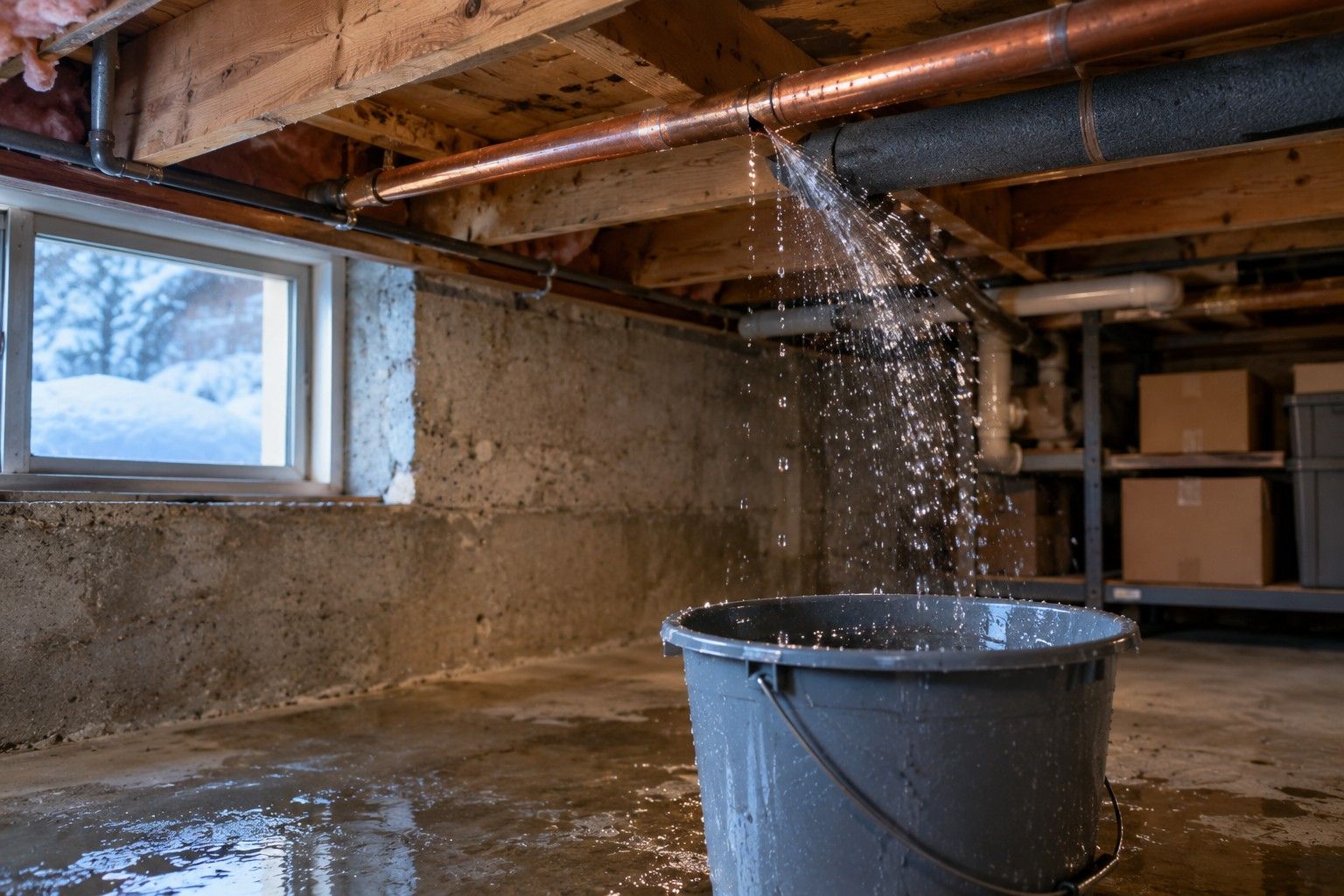
- Shut off the main water valve. This is why you find it in the fall.
- Open a faucet or two to drain what's left in the lines.
- Stay away from water near electricity. Don't use electrical appliances near standing water. If water is near the panel or outlets, stay out of the water and call your electric company, or 911 if anyone could get hurt.
- Call a licensed plumber.
- Take photos and call your insurer. Then move things out of the wet area and start drying it out.
Burst pipes are expensive. State Farm says its freeze claims from 2024 through June 2025 averaged over $30,000. All Hours Cleaning & Restoration, a water damage cleanup company in Idaho Falls, says on its own site that jobs there typically run $1,200 to $5,000, depending on how bad the damage is.
A leak alarm beeps or sends a phone alert when it gets wet, and some also warn when a room gets cold. They start around $20. A whole-house shutoff valve on the main line turns off the water when it sees a leak. It runs about $600, plus a plumber to put it in.
Water damage cleanup. All Hours Cleaning & Restoration says on its own site that it serves Idaho Falls and the greater Eastern Idaho area with 24/7 water damage service. Phone: (208) 881-1393, allhoursrestorationidaho.com. From the company's own website, checked November 2, 2026. Nobody paid to be mentioned. It's the only cleanup company we checked for this guide. We don't check licenses, insurance or the quality of anyone's work, and naming it isn't a recommendation. Fix or remove this
Is a frozen water line my problem or the city's?
In Idaho Falls, it depends on which side of the curb stop it's on. The curb stop is the city's shutoff valve near your property line. Idaho Falls City Code (Title 8, Chapter 4) says:
| Part | Whose it is | What the code says |
|---|---|---|
| Water main to the curb stop | The city | Installed, owned and maintained by the Water Division, including the curb stop |
| Water meter | The city | Stays city property (8-4-28). The city maintains and repairs meters, but can bill you if damage is your fault (8-4-29) |
| Curb stop into the house | You | "Customer water lines that become frozen are the responsibility of the customer." The city may thaw one and charge "fair and reasonable costs" |
So when the water stops, check your own valves first, then call the Water Division at (208) 612-8471to rule out a problem on the city's side. If it's your line, call a plumber. Ammon's water and public works line is (208) 612-4034. We couldn't read Ammon's water code online, so ask the city where its side ends.
General information from the city code as of November 2, 2026, not legal advice. Check the current code or ask the city.
I rent. Who fixes frozen pipes?
In Idaho, the landlord has to keep the plumbing and heat in working order. The Idaho Attorney General's Landlord and Tenant Manual lists "lack of hot/cold water" and "nonfunctioning heating units" among the conditions a landlord must fix. Tell your landlord right away, then give written notice. Under Idaho Code 6-320, if it isn't fixed within three days of written notice, the tenant can go to court.
Idaho law doesn't let tenants hold back rent or make the repair and deduct the cost. Tenants are expected to use the plumbing properly and can owe for damage they cause, like turning the heat off and leaving for a week. Renter's insurance usually covers your belongings, not the building. Read your lease too, since it may say who handles heat and freezing.
General information about Idaho law as of November 2, 2026, not legal advice. The Attorney General's manual is linked below.
How much does a frozen pipe cost to prevent or fix?
| Item | About | Good to know |
|---|---|---|
| Foam pipe sleeves | About $3 to $13 per 6 feet | About 50 cents to $2 a foot. Slows heat loss, doesn't add heat |
| Pipe heat cable with thermostat | $30 to $50 | Look for a UL listing. Plug into a GFCI outlet |
| Leak alarm | About $20 to $25 | Some also warn when a room gets cold |
| Whole-house automatic shutoff valve | About $600, plus install | Watches the main line and shuts the water off on a leak |
| Plumber thaws a pipe | About $100 | National figure. Emergency calls can add $100 to $300 |
Prices change. Store prices are from Walmart.com and True Value's website, and national ranges from Angi and HomeAdvisor cost guides. No Idaho Falls plumber we checked posts a thawing price. We don't name product brands.
Which Idaho Falls plumbers handle frozen and burst pipes?
These local plumbers say on their own websites that they handle frozen or burst pipes, emergency calls, or both. They're in alphabetical order, and nobody paid to be here. We don't check licenses, insurance or the quality of anyone's work, and being on this list isn't a recommendation. Ask about after-hours and trip charges when you call, since none of them post those.
Show plumbers whose sites
Advanced Home Services
Idaho Falls, Ammon and much of Southeast Idaho
Heating, plumbing and electrical. It has a page just for frozen and burst pipes, says that when they can, its techs thaw a frozen line before it bursts, and posts a $39 burst pipe diagnostic. The page lists same-day service availability.
From the company's own website, checked November 2, 2026. Fix or remove this
Criterion Plumbers
Idaho Falls, Ammon, Iona, Ucon, Rigby, Shelley and more
Plumbing company with an Idaho Falls office. Lists its hours as 24/7 and says emergency service is available. Its service plan waives trip and emergency fees for members. It doesn't post what those fees are.
From the company's own website, checked November 2, 2026. Fix or remove this
First Call Jewel
Idaho Falls, Ammon and much of Eastern Idaho
Heating, cooling, plumbing and electrical. Its emergency plumbing page lists flooding from frozen pipes, its plumbing page lists burst pipes, and it says emergency service is 24/7. It posts a separate number to call or text after hours.
After-hours plumbing line: (208) 313-4113
From the company's own website, checked November 2, 2026. Fix or remove this
First Street Plumbing & Heating
Idaho Falls, Ammon and Bonneville, Bingham, Jefferson and Madison counties
Plumbing and heating with an Idaho Falls office and showroom. Its FAQ calls frozen pipes one of the most common and costly plumbing emergencies in Eastern Idaho and says it offers 24/7 emergency service.
Emergency line: (208) 970-1016
From the company's own website, checked November 2, 2026. Fix or remove this
Idaho Furnace & Plumbing Source
Idaho Falls, Ammon, Rigby, Shelley, Rexburg and more
Heating and plumbing. Says its emergency team is available 24/7 and lists burst pipes among its plumbing jobs. No frozen pipe price posted.
From the company's own website, checked November 2, 2026. Fix or remove this
King George's Royal Flush
Idaho Falls, Ammon, Shelley and Iona
Mostly drains and sewer lines, plus general plumbing repairs. Talks about catching a frozen line before it floods a basement, and says it offers same-day emergency drain service.
From the company's own website, checked November 2, 2026. Fix or remove this
Roto-Rooter Plumbing & Water Cleanup (Idaho Falls)
Idaho Falls, Ammon, Iona, Shelley, Ucon and more
An independently operated franchise of the national company. Its Idaho Falls site says it answers frozen and burst pipe emergencies 24/7, all year, and that cold here can freeze pipes in outside walls, crawl spaces and garages.
From the company's own website, checked November 2, 2026. Fix or remove this
S & H Plumbing
Idaho Falls, Ammon, Iona, Ucon, Rigby, Shelley and more
Local plumbing company since 1982. Lists 24/7 plumbing and says it handles burst pipes and severe leaks. Prices by phone.
From the company's own website, checked November 2, 2026. Fix or remove this
Not on the list? We only list plumbers whose own sites mention frozen or burst pipes or emergency service. If yours does and we missed it, email hello@eastidahopros.com.
Printable cold snap card
Print this, fill in the blanks with a pen, and tape it inside a kitchen cabinet or on the fridge. When the water stops at 6 a.m., you won't have to hunt for anything.
Our cold snap card
- Our main water shutoff is
- Our plumber
- Landlord or property manager
- Idaho Falls Water Division
- (208) 612-8471
- Ammon Water and Public Works (weekdays)
- (208) 612-4034
Cold night (20°F or colder)
- Heat at 55°F or higher, all night
- Trickle the faucets on outside walls
- Open the cabinets under those sinks
- Garage door shut
- Hoses off outside
If the water stops
- Check the valves by the sink, water heater and softener
- Ask a neighbor if they have water
- Open the faucet and warm the pipe with a hair dryer or warm towels
- Never a torch or open flame
- Can't find it or reach it? Call a plumber
If a pipe bursts
- Shut off the main
- Open a faucet to drain the lines
- Stay out of water near electricity
- Call a plumber, take photos, call insurance
From eastidahopros.com, checked November 2, 2026. General information, not professional advice.
Common questions
What temperature do pipes freeze at?
Water freezes at 32°F, but pipes inside a heated house usually hold up longer. Pipes can freeze and burst once it's 20°F or colder outside, says a Texas A&M extension sheet built on Red Cross and IBHS advice. Pipes in unheated spots like crawl spaces, garages and outside walls are the first to go. Idaho Falls averages about 80 nights at 20°F or colder from November through March.
Should I drip my faucets, and do I need to drip all of them?
On very cold nights, let a thin trickle run from the faucets whose pipes are most exposed, like a sink on an outside wall or above a crawl space. The Red Cross says to let cold water drip from the faucet served by exposed pipes. IBHS goes further and says to drip all faucets in extreme cold. The City of Idaho Falls tells people to leave a trickle of cold water running if a line has frozen before. University of Illinois Extension says to trickle hot and cold.
What should I set my thermostat to so pipes don't freeze?
At least 55°F, day and night, even when nobody is home. That's the advice from the Red Cross, the Insurance Institute for Business & Home Safety and University of Illinois Extension. The Red Cross also says to skip the nighttime setback during a cold snap.
Who is responsible for a frozen water line in Idaho Falls?
Idaho Falls City Code says the city owns the line from the water main up to and including the curb stop (the shutoff valve near your property line), plus the meter. The line from the curb stop into the house is yours, and the code says frozen customer lines are the customer's responsibility. The city may thaw one and charge you a fair and reasonable cost.
Who do I call in Idaho Falls when my water stops?
First check whether it's one faucet or the whole house, and make sure the valves inside are open, including the ones by the water heater and softener. If you still have no water, call the Idaho Falls Water Division at (208) 612-8471. The city's staff directory lists 208-612-8439 as the Water Division's after-hours number. We haven't called it to confirm.
Who do I call in Ammon for a frozen line or no water?
Ammon's water and public works line is (208) 612-4034, and City Hall is (208) 612-4000. The city doesn't post an after-hours water number. Its contact page lists 911 and non-emergency dispatch at (208) 529-1200 for after-hours emergencies.
Can I use a torch or heat gun to thaw a frozen pipe?
No torch. The City of Idaho Falls says too much heat too fast can crack the ice inside and split the pipe, and the Red Cross says never use a blowtorch, propane or kerosene heater, charcoal stove or any open flame. In 2013 a weed burner used to thaw a pipe in a crawl space set a home near Idaho Falls on fire. Use a hair dryer, a heating pad or towels soaked in warm water.
How deep are water lines buried in Idaho Falls?
The city says water lines are generally buried 5 to 6 feet deep, below the normal frost line. In long stretches of extreme cold, frost has been known to go more than 7 feet down, and smaller lines, like the one from the street to your house, freeze more easily.
I rent. Who fixes frozen pipes?
In Idaho the landlord has to keep the plumbing and heat working. Tell your landlord right away, then in writing. If it isn't fixed within three days of written notice, Idaho Code 6-320 lets a tenant take it to court. Idaho law doesn't let tenants hold back rent or fix it themselves and deduct the cost. Tenants are expected to use the plumbing properly and not cause damage.
Does homeowners insurance cover a burst pipe?
Often, for the sudden water damage, if you took reasonable care. The National Association of Insurance Commissioners says homeowners policies cover sudden and accidental discharge from plumbing, and often cover the water damage when frozen pipes burst if the homeowner took reasonable steps. Policies generally require keeping the home at a minimum temperature and may require shutting off the water if it's vacant. Read your own policy or ask your agent. This is general information, not insurance advice.
How much does a plumber charge to thaw a frozen pipe?
No Idaho Falls plumber we checked posts a thawing price. National cost guides put thawing at about $100, and fixing a burst pipe at about $500 on average, usually $200 to $3,000, plus $100 to $300 for an emergency call.
Where this comes from
We checked everything on November 2, 2026. City rules and phone numbers come from the cities' own websites and code, prevention and thawing advice from the Red Cross, IBHS, university extension services and federal agencies, and the plumbers from their own websites. Insurer pages are labeled as insurers. We read a large Idaho Falls Facebook group to learn what people ask, but didn't take any facts from it or keep anyone's name. We'll check it all again every November.
City of Idaho Falls and Ammon
- City of Idaho Falls, "What to do if your water lines freeze" (January 17, 2025) and Tips for Preventing Frozen Waterlines
- Idaho Falls Water Division and the city staff directory, Water (after-hours number)
- Idaho Falls City Code, Title 8, Chapter 4, Water Service (sections 8-4-2, 8-4-19, 8-4-23, 8-4-28 and 8-4-29)
- City of Ammon, Water, Utilities and Contact
- Idaho Falls Fire Department, winter fire risks (January 2, 2026)
Prevention, thawing and safety
- American Red Cross, Frozen Pipes
- IBHS, before a winter event, winter weather guide release (November 14, 2024), Winter Ready and after an event
- Texas A&M AgriLife Extension, Winter Storms: Frozen Pipes (adapted from Red Cross and IBHS material)
- State Farm, frozen pipe tips (an insurer) and Lowe's, frozen pipes prevention and repair (a store's how-to; start at the faucet end, GFCI outlets)
- University of Illinois Extension, frozen pipes (February 8, 2021)
- International Code Council, Build It to Code to Minimize Damage from Frozen Water Pipes
- Colorado State University Extension, preparing your sprinkler system for winter
- Frost-proof sillcock installation instructions (a manufacturer's sheet)
- CPSC, heat tapes and cables and space heater safety (January 23, 2026)
- Pipe heat cable installation instructions (a manufacturer's sheet)
- Thaw fire near Idaho Falls: Local News 8, January 12, 2013
Weather
- NOAA 1991 to 2020 climate normals, Idaho Falls Regional Airport
- January 30, 2023 low of -32°F: Post Register, citing the National Weather Service
Renters, insurance and costs
- Idaho Code 6-320 and the Idaho Attorney General, Landlord and Tenant Manual (July 2026)
- National Association of Insurance Commissioners, burst pipes and homeowners insurance (February 8, 2024)
- State Farm, frozen pipe claims (an insurer, January 20, 2026)
- HomeAdvisor, burst pipe repair cost and Angi, burst pipe repair cost
- Angi, water damage restoration cost and pipe insulation cost
- Store prices: Walmart, foam pipe sleeve, Walmart, heating cable, True Value, pipe heating cable, Walmart, leak alarm, Walmart, Wi-Fi leak and freeze sensor and Walmart, whole-home shutoff valve
Local companies
- Each plumber's own website, linked in its entry above, and All Hours Cleaning & Restoration
- Towns First Street Plumbing & Heating serves, including Ammon: its areas served page
Every house is different, and nothing here is a promise that your pipes won't freeze. Rules, numbers and prices change, so check before you count on them. Spot something out of date? Email hello@eastidahopros.com and we'll fix it.
Still have a question?
Ask your neighbors in Ask East Idaho, our free Facebook group for Idaho Falls, Ammon, Rexburg, Pocatello and nearby towns. Good questions there help us decide which guide to write next.
You need a Facebook account to join. It's a private group, so only members see posts. When you ask to join, we ask you to agree to the group's rules and answer two quick questions: which part of East Idaho you're in or curious about, and what you're hoping to find. We never ask for your email or phone number.